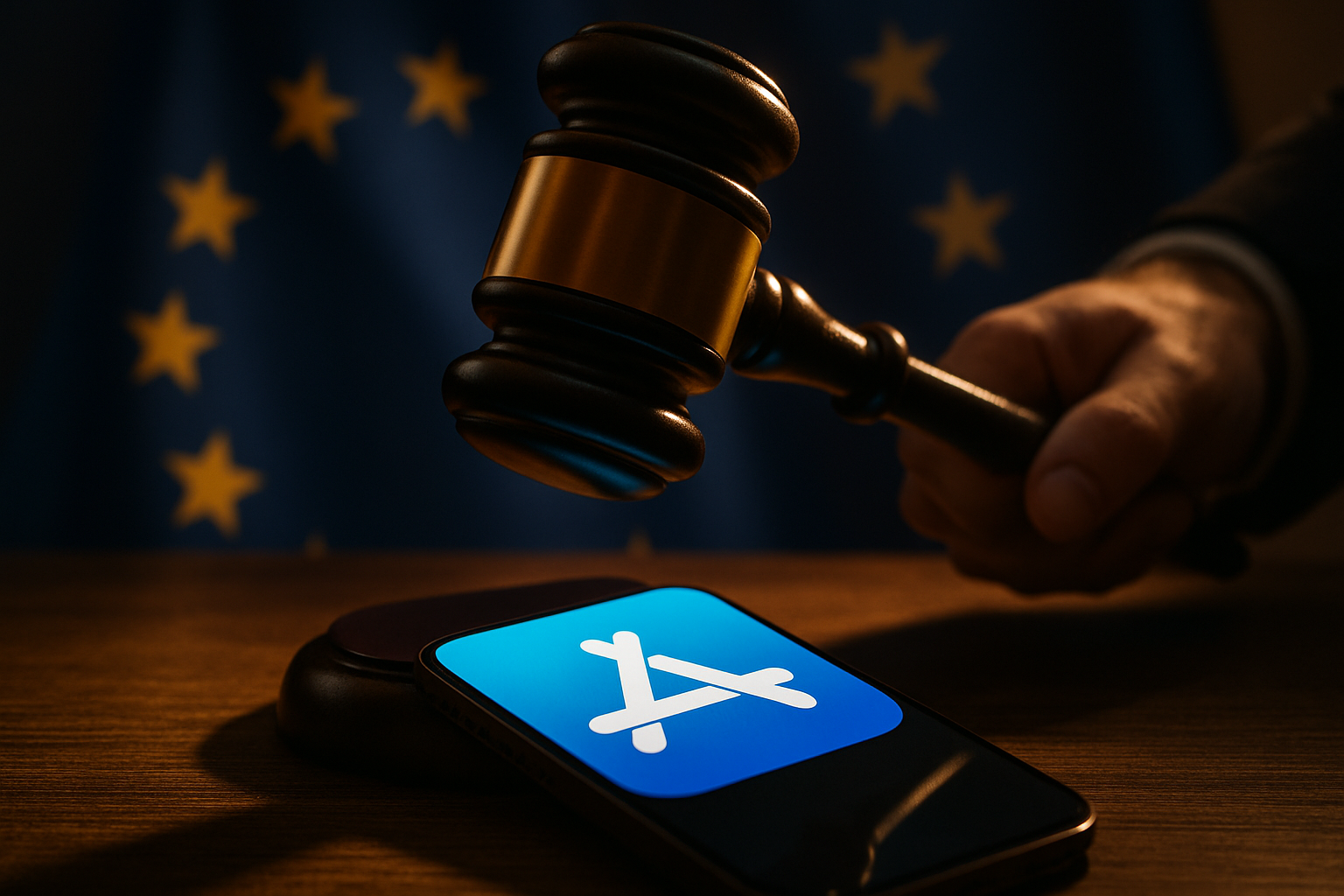
The CJEU Ruling: Opening the Door to Collective Damages
The Court of Justice of the European Union (CJEU) has delivered a significant jurisdictional ruling that clears the way for large-scale antitrust damages claims against Apple over its App Store policies to proceed in Dutch courts. The decision, handed down on 2 December 2025 but reverberating through the legal landscape as of late June 2026, allows two collective actions — brought on behalf of millions of Dutch consumers — to move beyond procedural disputes and toward a full examination of the merits. The case could result in hundreds of millions of euros in potential liability for the technology giant, adding to the mounting legal pressures it faces in Europe.
The ruling concerns two parallel representative actions filed under the Dutch collective action regime (WAMCA) by Stichting App Stores Claims (ASC) and Stichting Right to Consumer Justice (RCJ). These foundations allege that Apple’s App Store rules — including the mandatory use of Apple’s own in-app payment system and the imposition of a 30% commission on many digital transactions — constitute an abuse of dominant market position, in violation of EU competition law. The claims seek compensation for allegedly excessive fees and unfair conditions imposed on apps offered to users of the Dutch App Store (App Store NL). The CJEU’s judgment confirms that Dutch courts have jurisdiction to hear these claims, rejecting Apple’s argument that jurisdiction should rest in Ireland, where Apple Distribution International Ltd — the company that enters into App Store contracts with EU developers — is based.
According to the research, the two foundations’ lawyer, Rogier Meijer, has stated that the claims cover an estimated 7 million affected iPhone users and 7 million affected iPad users in the Netherlands. The total alleged damages, including statutory interest, are put at around €637 million. Apple, for its part, has publicly stated that it disagrees with the judgment, calling it “purely a matter of jurisdiction,” and has pledged to “robustly defend” itself in the Dutch proceedings, insisting the claims are without merit.
Why This Matters: A Turning Point for EU Antitrust Enforcement
The CJEU ruling is more than a procedural step in a single national case. It is emblematic of a broader, intensifying crackdown on Apple’s App Store dominance across Europe. The Dutch decision comes on top of two major penalties already imposed by the European Commission: a €1.8 billion fine for abusive App Store rules affecting music streaming providers (notably Spotify), and a €587 million fine issued in April 2026 for violating the Digital Markets Act (DMA) by preventing developers from “steering” users to cheaper offers outside the App Store. Apple is currently appealing the DMA fine before the EU’s General Court, the Union’s second-highest court.
Taken together, these actions represent a three-pronged assault on Apple’s App Store business model. First, national damages claims — now empowered by the CJEU’s jurisdictional clarity — allow individual consumers and businesses to seek compensation for past harm caused by alleged anticompetitive conduct. Second, classical antitrust enforcement under Article 102 of the Treaty on the Functioning of the European Union (TFEU) has already yielded the €1.8 billion fine, with the Commission arguing that Apple’s rules stifled competition in music streaming. Third, the Digital Markets Act, a new regulatory framework that came into full effect in 2024, imposes ex-ante obligations on designated gatekeepers like Apple, requiring them to allow alternative app stores, enable sideloading, and permit developers to communicate freely with their customers. The €587 million fine under the DMA is among the first of its kind, signaling that the Commission is prepared to enforce the new rules aggressively.
The cumulative effect is that Apple faces simultaneous legal challenges in multiple forums over the same core practices. The Dutch case, in particular, could serve as a bellwether for dozens of similar collective actions across other EU member states. If successful, it would force Apple to pay significant compensation to a broad class of consumers — a development that would reverberate well beyond the Netherlands.
Background: The Road to the CJEU Ruling
The CJEU’s decision traces back to a jurisdictional dispute that arose in 2023. The Amsterdam District Court (Rechtbank Amsterdam) had been asked to hear the two collective actions against Apple. Apple argued that the claims should be brought in Ireland, where its European distribution arm is headquartered, because the relevant contracts with developers were governed by Irish law. The foundations countered that the alleged harm was suffered by Dutch consumers and that the claims related to conduct affecting the Dutch market.
The Dutch court referred the question of jurisdiction to the CJEU for a preliminary ruling. In its judgment, the CJEU clarified that, under EU law, a national court has jurisdiction to hear collective damages actions for alleged violations of EU competition law when the harm is suffered by consumers based in that member state — even if the defendant’s contractual counterparty is established in another member state. The ruling effectively upholds the rights of consumers to seek redress in their home courts, a principle that has significant implications for cross-border antitrust litigation across the union.
The CJEU’s reasoning is rooted in the need to ensure effective enforcement of EU competition law. By allowing consumers to sue in their own jurisdiction, the court reduces the practical barriers to bringing damages claims — including the cost and complexity of litigating abroad. This is particularly important for collective actions, where the aggregated claims of many individuals may otherwise be too fragmented to pursue. The judgment thus aligns with the European Commission’s broader push to facilitate private enforcement of competition law alongside public enforcement.
Perspectives: The Balancing Act of Regulation and Innovation
The CJEU ruling and the wider regulatory assault on Apple have drawn sharply contrasting reactions from different stakeholders.
Consumer advocates and claimant foundations welcome the decision as a victory for consumer rights. Rogier Meijer, the lawyer representing the Dutch foundations, has argued that Apple’s App Store fees — which can reach 30% on in-app purchases — are excessive and have been passed on to consumers in the form of higher prices for apps and digital services. The foundations contend that Apple’s rules lock developers into a closed ecosystem, stifling competition and innovation. They see the Dutch case as a means of securing compensation for a harm they believe has been widespread and long-standing.
Apple defends its App Store model as essential to maintaining a secure and trusted platform. The company has consistently argued that its commission is a standard industry fee that covers the costs of hosting, distributing, and securing millions of apps, as well as providing developers with access to a global customer base. Apple also points to its App Store Small Business Program, which reduces the commission to 15% for developers earning less than $1 million per year. In response to the CJEU ruling, Apple reiterated that the decision is only about jurisdiction and that it “robustly” believes the claims to be meritless. The company is expected to argue in Dutch proceedings that its practices are lawful under EU competition law and that any alleged overcharges are not recoverable because they were passed on to consumers by developers — a defense known as the “passing-on” defense.
Regulators and policy makers within the EU institutions view the ruling as a welcome complement to their own enforcement actions. The European Commission has been clear in its view that Apple’s App Store rules are anticompetitive, and it has taken the lead in imposing fines. However, public enforcement alone cannot fully compensate all victims of anticompetitive conduct. The Dutch case, if successful, would provide direct financial redress to millions of European consumers, sending a strong signal that the legal system can deliver justice beyond what regulators can achieve. The Commission’s vice-president for competition policy has, in past statements, emphasized that private damages actions are a key pillar of the EU’s competition enforcement framework.
Technology industry observers note that the confluence of national damages claims, antitrust fines, and DMA obligations amounts to a fundamental challenge to Apple’s business model. Some analysts caution that the cumulative regulatory burden could stifle innovation, particularly if companies are forced to open their platforms in ways that compromise user security or reduce incentives to invest in ecosystem development. Others argue that open competition — including the ability for developers to use alternative payment systems and distribute apps through alternative stores — will spur innovation and lower prices for consumers. The Dutch case is being closely watched as a test of whether private litigation can deliver meaningful changes to market practices.
Impact and Implications: What the Ruling Means for Apple and for EU Law
The immediate practical impact of the CJEU ruling is that the Amsterdam District Court can now schedule a first substantive hearing to examine the merits of the claims. This will involve presenting evidence on whether Apple indeed abused its dominant position, what the appropriate measure of damages should be, and whether the passing-on defense applies. The case is likely to take years to resolve, with appeals possible to the Dutch Court of Appeal and the Hoge Raad (the Netherlands’ Supreme Court).
Beyond the Dutch case, the CJEU’s jurisdictional ruling has broader implications for EU antitrust litigation. It clarifies that member state courts have jurisdiction over collective antitrust damages claims based on harm to domestic consumers, even when the defendant’s contractual counterparty is in another country. This could spur a wave of similar actions across the EU, as consumer organizations and class-action law firms in other member states may now feel emboldened to file claims. The research notes that the foundations’ claims cover both iPhone and iPad users — an unusually broad definition of affected consumers — which may set a precedent for other collective actions to define the affected class widely.
For Apple, the ruling adds another front to its European legal battles. The company already faces the €1.8 billion music streaming fine (which is under appeal), the €587 million DMA fine (also being challenged), and several other investigations and proceedings. The Dutch damages claims, if successful, could cost Apple hundreds of millions of euros — but even a successful defense would require significant legal resources and could expose the company to further regulatory scrutiny. The case also intersects with the DMA: the same conduct that is the subject of the Dutch actions — the prohibition on steering users to cheaper offers — is exactly what the Commission fined Apple for under the DMA in April 2026. A finding by a Dutch court that Apple’s practices are anticompetitive could strengthen the Commission’s position in the DMA appeal.
On a broader level, the ruling reinforces the EU’s commitment to a multi-layered approach to platform regulation. The Commission’s enforcement of both Article 102 TFEU and the DMA, combined with private damages actions in national courts, creates a dense enforcement network that makes it increasingly difficult for dominant platforms to avoid liability. This model may serve as a template for other jurisdictions, such as the United Kingdom (which has its own digital markets regime) or India, as they grapple with the power of Big Tech.
What Happens Next: The Road Ahead
The next procedural step in the Dutch case is a substantive hearing before the Amsterdam District Court. This hearing will set a timetable for the exchange of evidence, the examination of expert witnesses, and the eventual trial. It is likely that Apple will file preliminary objections on the merits, arguing that there is no abuse of dominance or that the claims are not suitable for collective proceedings. The court will have to decide whether the case can proceed as a class action under the WAMCA regime, which requires that the claims share common questions of law or fact.
Parallel to this, Apple’s appeal against the €587 million DMA fine is being heard by the EU General Court. A decision in that case could affect the Dutch proceedings, as the DMA obligations are relevant to the assessment of whether Apple’s conduct was abusive. Similarly, the appeal against the €1.8 billion music streaming fine is also pending.
For consumers, the immediate effect is that the possibility of compensation remains alive — but distant. The legal process is expected to take several years, and Apple has indicated it will fight the claims every step of the way. Even if the foundations prevail, the actual distribution of damages to individual consumers will require a separate claims administration process. The lawyer Rogier Meijer has estimated that the average payout per affected user could be in the range of tens of euros — a modest sum per person, but significant when aggregated across 14 million alleged victims.
For policy makers, the CJEU ruling is a vindication of the EU’s legal architecture for private enforcement of competition law. It demonstrates that the system can deliver results, even in complex cross-border cases against powerful multinational corporations. However, it also highlights the challenges: the lengthy delays, the high costs, and the uncertainty inherent in litigation. Some observers argue that the DMA’s ex-ante rules are a more efficient tool for curbing anticompetitive conduct, while others insist that damages claims remain essential to compensate victims and deter future abuses.
As the legal drama unfolds in Amsterdam and Luxembourg, one thing is clear: Apple’s App Store business model is under siege in Europe as never before. The CJEU’s ruling is not the final word — but it is a decisive step in a long-running saga that will shape the digital economy for years to come. Whether through fines, regulatory mandates, or court-ordered compensation, the message from Brussels and the member states is consistent: the era of unchecked platform dominance is drawing to a close.