A Plot to Attack the White House: FBI Says It Thwarted Drone and Gunman Assault on UFC Event
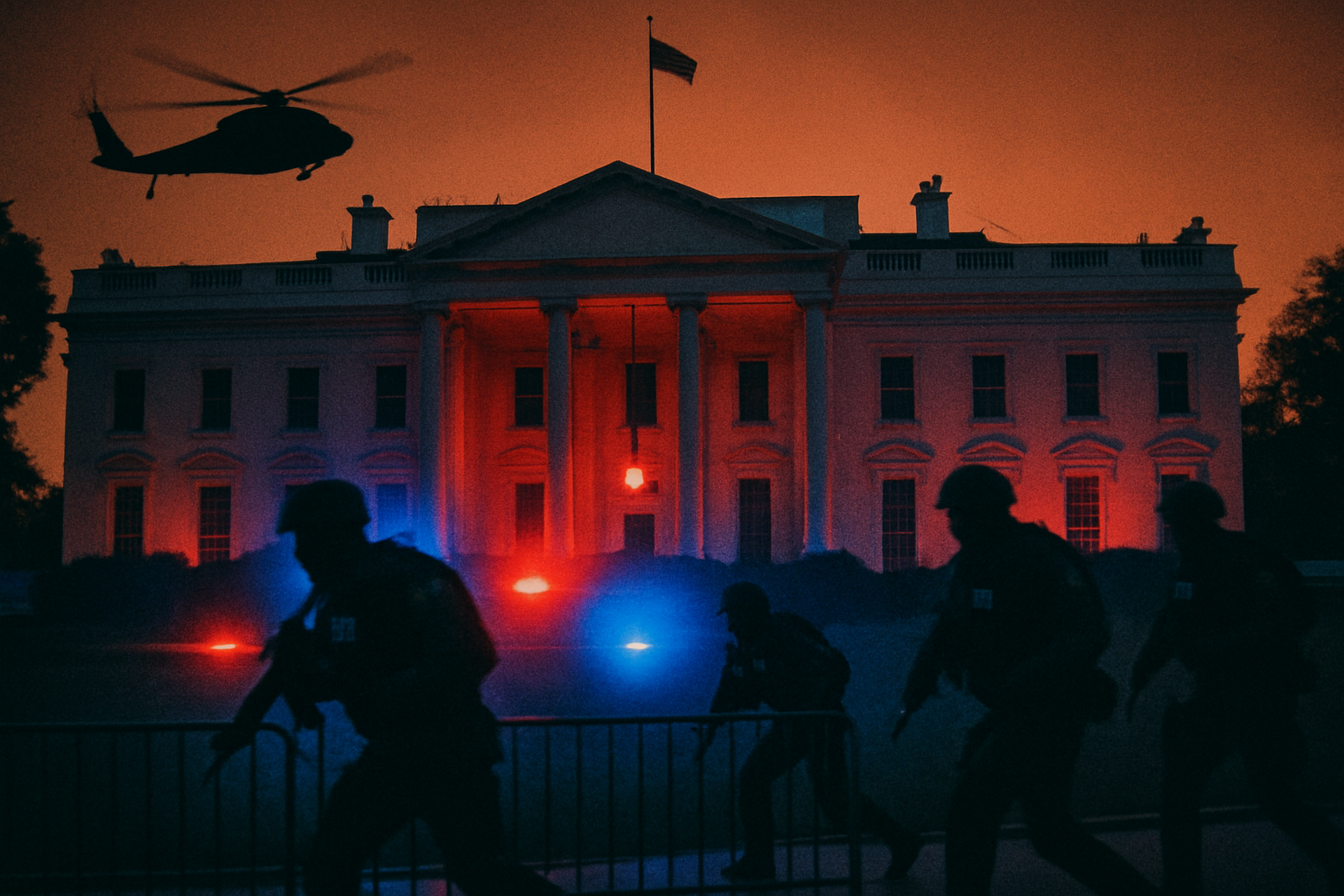
In what officials are calling a significant counterterrorism success, the Federal Bureau of Investigation and the Department of Justice have announced the disruption of a sophisticated plot to attack the UFC “Freedom 250” event, held on the White House South Lawn on June 14, 2026. Five suspects are in federal custody, and authorities say the alleged scheme — involving explosive-laden drones and an armed assault — was neutralized days before it could be executed.
The disclosure, made by FBI Director Kash Patel and supported by court filings, has sent shockwaves through Washington, raising urgent questions about the security of high-profile political gatherings, the evolving nature of domestic extremist threats, and the extent to which the plot represented a true danger to President Donald Trump and thousands of spectators.
What the FBI Says Happened
According to federal authorities, the alleged plot was uncovered on June 10, 2026 — just four days before the “Freedom 250” event. The FBI, working with the Justice Department and local law enforcement in multiple states, executed a series of coordinated arrests and searches between June 10 and June 15. The operation spanned Ohio, Missouri, Nebraska, and California.
The alleged plan had two key components:
FBI Director Patel, in a post on X and subsequent remarks, credited a “multi-state operation” for “stopping the planned attacks cold.” He emphasized that the threat was real and that the suspects had taken significant steps toward carrying out the attack.
Court records indicate that five individuals have been charged with conspiracy to commit murder and other federal offenses. Among them is Tycen Proper, aged 19, though full details on all defendants have not yet been released due to ongoing proceedings. Authorities have stated that the investigation is far from over: between 19 and 23 individuals are believed to have been involved or connected via encrypted communication channels. Additional suspects remain at large, and law enforcement continues to assess the network’s scope and any residual risk.
The event itself — UFC Freedom 250 — took place as scheduled on the White House South Lawn, an unprecedented venue for a mixed martial arts card. President Trump attended, alongside a crowd of thousands. The Secret Service, which oversees security for the White House complex, has confirmed that the president’s schedule was not altered, and the event was not canceled. This detail has become a point of contention in the debate over how imminent the threat truly was.
Key Players and Organizations
Federal Bureau of Investigation – Director Kash Patel has been the primary public face of the disclosure. The FBI led the investigation, leveraging intelligence from multiple sources to identify and disrupt the alleged plot.
U.S. Department of Justice – Federal charges have been filed in at least three jurisdictions related to the operation. Court affidavits outline the alleged conspiracy, describing encrypted chats, planned drone strikes, and shooter positions.
United States Secret Service – The agency responsible for the president’s safety played a central role in reviewing the threat. A Secret Service official described the plot as a “significant” or “grave” threat, but also noted that suspects remain at large and the investigation is incomplete. The decision not to alter the president’s schedule suggests that, at the time of the event, the agency believed the immediate danger had been mitigated.
Local law enforcement in Ohio, Missouri, Nebraska, and California assisted with search warrants, arrests, and the seizure of weapons, ammunition, and digital evidence.
President Donald Trump – He was present at the targeted event, a fact that underscores the gravity of the plot. As of available reporting, he was not publicly briefed before the event, and his schedule proceeded as planned.
Vice President J.D. Vance – In a Fox News interview, Vance publicly downplayed the seriousness of the plot. He suggested that the suspects lacked meaningful capability and that there was no credible, imminent threat to the president. His remarks stand in contrast to the alarmed framing from law enforcement and some media narratives, sparking a political debate about whether the FBI overstated the danger.
The Political Backlash and Debate
The disparity in public messaging — between the FBI’s grave language and Vice President Vance’s dismissive tone — has created an unusual and politically charged environment. On one side, officials like Patel argue that the disruption was a clear success that prevented a major attack. On the other, Vance and some commentators question whether the plot was ever truly close to execution or if it was a case of aspirational chatter amplified by law enforcement.
This debate touches on long-standing tensions between intelligence agencies and political figures. The question of how much risk to acknowledge — and how much to write off as bluster — is particularly acute when the target is a sitting president and a major public event.
Some security analysts point out that the FBI’s decision to announce the plot publicly, before all suspects are captured, is a departure from standard practice. Such disclosures can both deter other attackers and alarm the public, but they also risk tipping off remaining conspirators. The fact that the investigation is still active — with “additional suspects at large” — suggests that the FBI believes the network has not been fully dismantled.
Background and Broader Context
The “Freedom 250” event was itself a historic and symbolic affair. Hosted by President Trump over his 80th birthday weekend, the UFC card was a fusion of sports and politics, meant to project strength, spectacle, and close ties to a hugely popular fighting league. Holding it on the White House South Lawn turned the grounds into a temporary arena, with thousands of fans in attendance.
The alleged plot — using drones as weapons — reflects a growing concern among security agencies worldwide. Small, commercially available drones can be weaponized with relative ease, and defending against a swarm of explosive-laden quadcopters remains a significant challenge for any security service. The addition of gunmen indicates a layered assault designed to maximize casualties and chaos.
The target selection appears to aim at both symbolic and human impact: the White House grounds, a sitting president, and a large civilian audience. The investigation’s focus on encrypted communications suggests the conspirators attempted to avoid surveillance, a hallmark of modern extremist organizing.
What Happens Next
Legal proceedings for the five arrested individuals are moving through the federal courts. Charges include conspiracy to commit murder, which can carry life sentences. Additional charges are likely as the investigation unfolds.
The FBI continues to search for the remaining suspects described as part of the broader network. Officials have urged the public to remain vigilant but have not called for any specific security alerts beyond existing warnings about domestic extremism.
The Secret Service is conducting an internal review of its procedures in light of the plot, particularly the decision not to alter the event schedule. While the agency has defended its judgment, the episode may prompt changes in how threats to the White House — especially from drones — are assessed in the future.
On the political front, the dispute between Vice President Vance and the FBI is unlikely to fade quickly. It represents a fundamental disagreement over risk assessment and the role of law enforcement in communicating threats to the public. Democrats and some security hawks have accused the Trump administration of downplaying a serious plot to avoid embarrassing the president; supporters of Vance argue that the FBI has a history of overstating threats to justify its budget and authority.
For the public, the incident is a stark reminder that even the most secure events — held on the White House lawn — can be the focus of elaborate attack plans. The fact that five people are already in custody, and that additional arrests are expected, offers some reassurance, but the broader questions about who these individuals are, what motivated them, and how they were able to organize remain unanswered.
Analysis: A Test for Security and Transparency
The plot against UFC Freedom 250 is a test case for how the United States handles emerging threats in a polarized political environment. On one hand, the FBI’s disruption demonstrates the effectiveness of intelligence-led policing and inter-agency coordination. On the other, the political fallout highlights the difficulty of maintaining public confidence when official narratives are contested.
The decision to hold the event as scheduled — with the president present — was a calculated risk. The Secret Service and FBI concluded that the threat had been contained. But the fact that suspects remain at large means the calculation is not yet complete.
As the investigation continues, the nation will learn more about the alleged conspirators’ motives, the extent of the network, and whether any outside actors were involved. For now, the story stands as a sobering illustration of the persistent dangers facing high-profile targets and the complex challenge of balancing security, political messaging, and public transparency.
The coming weeks will be critical: court hearings may reveal new details, and any further arrests will test whether the FBI’s assessment of the plot’s seriousness holds up. Regardless of the outcome, the event has already exposed deep fault lines in how America talks about threats — and how much weight to give them.