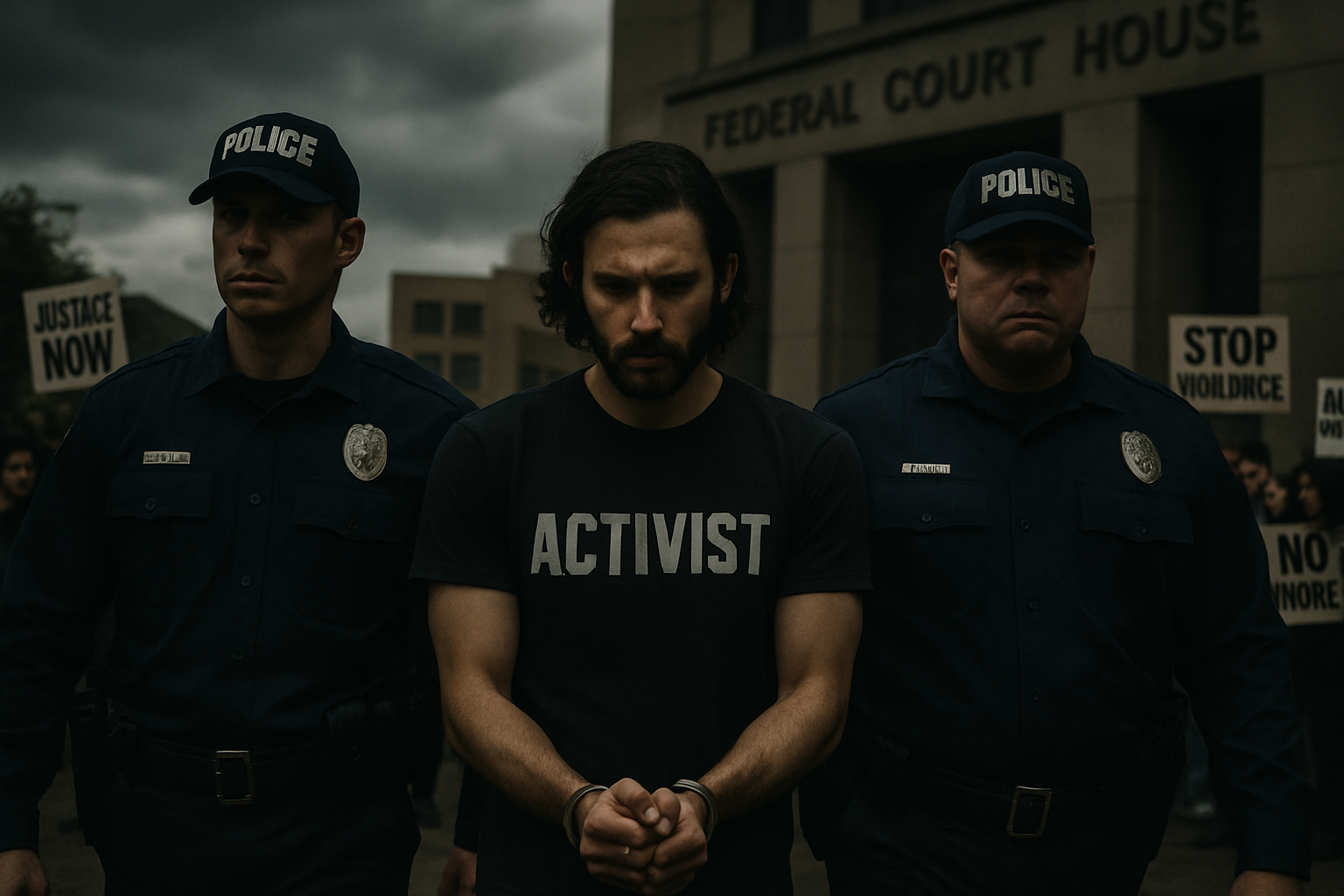
The Indictment of 15 Anti-ICE Activists in Minnesota: A Polarized Legal and Political Battle
On June 16, 2026, the U.S. Attorney’s Office for the District of Minnesota announced that a federal grand jury had indicted 15 Minnesotans on charges of conspiracy to impede or injure federal officers, assault on federal officers, and related counts. The indictments stem from protests that allegedly interfered with immigration enforcement operations at a federal facility in Minneapolis–St. Paul during the winter of 2026. As of mid-June, most of the defendants are in custody, initial court appearances and detention hearings are underway, and the case has ignited a firestorm of protest and political debate, both locally and nationally.
The charges mark one of the most significant federal crackdowns on organized opposition to U.S. Immigration and Customs Enforcement (ICE) in recent years. The accused are described by prosecutors as members or associates of Direct Action Minnesota, a network that federal authorities characterize as a militant anti-ICE group using “militant tactics” to obstruct enforcement and surveil officers. Defense attorneys and supporters, however, frame the case as a politically motivated attack on dissent and a criminalization of legitimate protest.
What Is Happening Now: The Legal and Public Landscape
As of mid-June 2026, the legal process is in its early stages. According to the U.S. Attorney’s Office, the indictment charges the 15 individuals with actions taken during protests that allegedly blocked immigration enforcement operations at the Whipple Federal Building in the Twin Cities. The charges include:
The government alleges that the defendants used “militant tactics” — including physical obstruction, surveillance, and following federal officers across state lines into Wisconsin — to hinder ICE and Customs and Border Protection (CBP) operations. The indictment describes a coordinated campaign by Direct Action Minnesota to monitor and disrupt immigration enforcement, which prosecutors say escalated to direct confrontations.
Of the 15 defendants, 12 were arrested in coordinated raids on the morning of June 16. One, Kyle Wagner, was already in federal custody on a prior case from February 2026 involving alleged threats against ICE agents; he now faces additional charges for his role in the protests. Two other defendants remain fugitives and are actively sought by federal authorities.
The defendants are appearing before U.S. District Court judges in Minneapolis for initial appearances, arraignments, and detention hearings. Bail decisions and the scheduling of future motions and trial dates are expected in the coming weeks. Among the named individuals in local coverage is Natasha Rakotz, one of the 15 facing conspiracy charges related to anti-ICE organizing over the winter.
Meanwhile, protests and solidarity actions have continued in Minneapolis since the charges were announced. Rallies have been held outside the Whipple Federal Building — the main immigration enforcement hub in the region — and online campaigns have condemned the indictments as “criminalization of dissent” and “political retaliation” against anti-ICE organizers. Supporters of the defendants describe them as non-hierarchical anti-deportation activists, while federal prosecutors and some law enforcement narratives link the group to “Antifa”-style tactics.
Why It Matters: A Flashpoint in Immigration Enforcement and Civil Liberties
The case sits at the intersection of several highly charged national debates: immigration enforcement, the limits of protest, the role of federal law enforcement in responding to organized resistance, and the balance between public safety and civil liberties.
For the federal government, the indictment represents a forceful response to what it views as escalating violence and obstruction directed at immigration officers. The Department of Justice (DOJ) and the Department of Homeland Security (DHS) have emphasized that federal officers must be able to carry out their duties without interference. In the announcement, the U.S. Attorney’s Office argued that the defendants’ actions went beyond peaceful protest and crossed into criminal conduct, including assault and conspiracy.
For immigrant-rights and civil-liberties advocates, the case raises alarms about the criminalization of political organizing. They argue that the charges are overly broad and target activists who were engaged in constitutionally protected protest, including the monitoring of law enforcement. The indictment also occurs against a backdrop of internal DHS investigations into use-of-force incidents by ICE and CBP in Minnesota, which critics say underscores the need for oversight rather than prosecutorial escalation.
The case also has implications for federal-state-local relations. Minnesota has been a focal point of tensions between state-level sanctuary policies and federal immigration enforcement. The Twin Cities have a history of activism around immigrant rights, and the charges are likely to deepen divisions between supporters of tough enforcement and those who view ICE operations as harmful to communities.
Background and Context: The Winter 2026 Protests and Broader Tensions
The indictments are the culmination of a series of protests that began in the winter of 2026, during which activists allegedly interfered with immigration enforcement operations at the Whipple Federal Building. According to the indictment, demonstrators blocked access to the facility, surveilled agents, and engaged in direct confrontations. Some defendants are also accused of following federal officers across state lines into Wisconsin, a detail that prosecutors highlight as evidence of organized, premeditated obstruction.
Direct Action Minnesota, described by federal authorities as a “militant direct-action network,” emerged as a central player in these protests. Prosecutors allege that the group coordinated the blocking and surveillance activities, using tactics that included physical barriers and real-time tracking of agents. Supporters and defense attorneys dispute this characterization, portraying Direct Action Minnesota as a loose, non-hierarchical network of activists focused on preventing deportations through nonviolent civil disobedience.
The broader context includes ongoing internal reviews within DHS regarding conduct during earlier immigration enforcement operations in Minnesota in January and March 2026. Those reviews, which involve ICE and CBP, are examining allegations of excessive force and other misconduct. For activists, these investigations underscore what they see as a pattern of aggressive federal enforcement that warrants public resistance. For law enforcement, the protests represent an unacceptable escalation that forced the government to act.
The case also has a personal dimension: Kyle Wagner had already been charged in February 2026 with threatening ICE agents. His inclusion in the new indictment suggests federal prosecutors view him as a repeat offender who continued to pose a threat to officer safety.
Different Perspectives: Prosecutors, Defendants, and Supporters
The narrative around the case is sharply divided.
Federal prosecutors and law enforcement portray the defendants as part of a dangerous, organized movement that targeted federal officers with harassment, surveillance, and physical obstruction. In the official announcement, the U.S. Attorney’s Office stated that the 15 individuals conspired to impede or injure federal officers and assaulted them during the course of their duties. The charges are serious: conspiracy to impede federal officers carries a potential sentence of up to 20 years, and assault on a federal officer can carry even longer penalties. Prosecutors have emphasized that the defendants’ actions went far beyond peaceful protest, citing the cross-state surveillance and blocking of federal facilities as evidence of criminal intent.
Defense attorneys and supporters argue that the charges are a politically motivated overreach designed to silence legitimate opposition to immigration enforcement. They note that many activists were engaged in activities protected by the First Amendment, such as recording officers and organizing public demonstrations. The fact that two defendants are still at large and that multiple arrests were made in coordinated early-morning raids has been cited by critics as evidence of heavy-handed tactics. Supporters have launched online campaigns framing the case as “criminalization of dissent” and “political retaliation.” Local immigrant-rights and civil-liberties groups are beginning to provide legal support and organize solidarity protests.
Some neutral legal analysts note that the case will test the boundaries of protest law. While the Supreme Court has generally protected peaceful protest, instances of physical obstruction, threats, and following officers across state lines can move conduct outside First Amendment protections. The outcome may hinge on whether the government can prove that the defendants’ actions constituted a conspiracy to commit assault and obstruction, rather than spontaneous or loosely coordinated protest.
Impact and Implications: What This Means for Activism, Immigration Enforcement, and Politics
The indictment is already reshaping the landscape for immigration activism in Minnesota and beyond.
For anti-ICE activists, the charges send a chilling message: Organizing to physically block enforcement operations can lead to federal felony charges, pretrial detention, and years in prison. The case may deter some from direct action tactics, while galvanizing others who view the indictments as proof that the system is biased against immigrants and their allies. The involvement of Direct Action Minnesota, which some compare to Antifa-style groups, also ties the case to broader debates about left-wing militancy.
For immigration enforcement agencies, the DOJ’s aggressive prosecution signals a willingness to use federal conspiracy and assault statutes to protect officers. This could embolden ICE and CBP to operate more freely in areas with strong activist opposition, knowing that the Justice Department will back them up with criminal charges. At the same time, internal investigations into use-of-force incidents in Minnesota may complicate the narrative, as activists point to official misconduct as a justification for resistance.
For the Biden administration (assuming a continued Democratic presidency — though the article should not assume partisan control beyond what research implies; research does not specify administration, so avoid naming president unless confirmed. Since no president is named, write around it), the case presents a political dilemma. The DOJ is prosecuting activists who are part of a movement that aligns with immigrant-rights and progressive constituencies. However, upholding the rule of law and protecting federal officers is a core government function. The administration may face pressure from both sides: from immigration hardliners demanding even tougher action, and from civil-liberties advocates accusing it of overreach.
At the local level in Minnesota, the case is likely to intensify debates over sanctuary policies and cooperation with federal immigration authorities. The Twin Cities have been a battleground between state and local leaders who resist ICE operations and federal officials who argue that such resistance endangers agents and undermines enforcement. The indictments may lead to further legislative or legal clashes over the extent of local cooperation.
What Happens Next: Court Proceedings and Broader Fallout
In the immediate term, the focus will be on the legal proceedings. The 12 arrested defendants will continue to appear in federal court in Minneapolis for detention hearings and arraignments. Kyle Wagner, already in custody, will face additional proceedings. The two fugitives remain at large, and federal authorities are expected to intensify efforts to locate them.
The defense is likely to file motions challenging the charges on First Amendment grounds, arguing that the government is criminalizing protected protest activity. The prosecution will counter that the defendants’ actions — particularly the surveillance and physical obstruction — fall outside constitutional protections. The case may take months or years to reach trial, and the outcomes of pretrial hearings on bail and the scope of the indictment will be closely watched.
Beyond the courtroom, the political and social fallout will continue. Solidarity protests are expected to grow, particularly if any defendants are denied bail or held in detention for extended periods. National immigrant-rights organizations may become more involved, potentially filing amicus briefs or launching public campaigns. At the same time, federal law enforcement agencies may use the case to argue for increased resources and legal tools to combat what they see as organized resistance.
Internal investigations within DHS into use-of-force incidents in Minnesota could also produce findings that either support the activists’ claims of aggressive enforcement or vindicate the officers. Any official reports of misconduct could fuel further protests and provide ammunition for the defense.
Finally, the case may become a rallying point in the 2026 midterm elections (assuming that timeline — the article is set in June 2026, so midterms are upcoming). Candidates from both parties may seize on the indictments to appeal to their bases, with Republicans highlighting the need to protect ICE agents and Democrats expressing concern about the criminalization of protest. The Minnesota congressional delegation is likely to be divided, with some members calling for a full investigation and others defending the prosecution.
Conclusion
The indictment of 15 anti-ICE activists in Minnesota marks a significant escalation in the ongoing conflict between federal immigration enforcement and organized opposition. The charges — conspiracy, assault, and obstruction — reflect the government’s determination to protect its officers and operations. But the case also raises profound questions about the limits of protest, the role of surveillance and direct action, and the balance between security and civil liberties.
As the legal process unfolds in Minneapolis, the nation will watch closely. The outcome will not only determine the fate of the 15 defendants but could also shape the future of immigration activism, the tactics of federal law enforcement, and the political contours of the immigration debate for years to come.