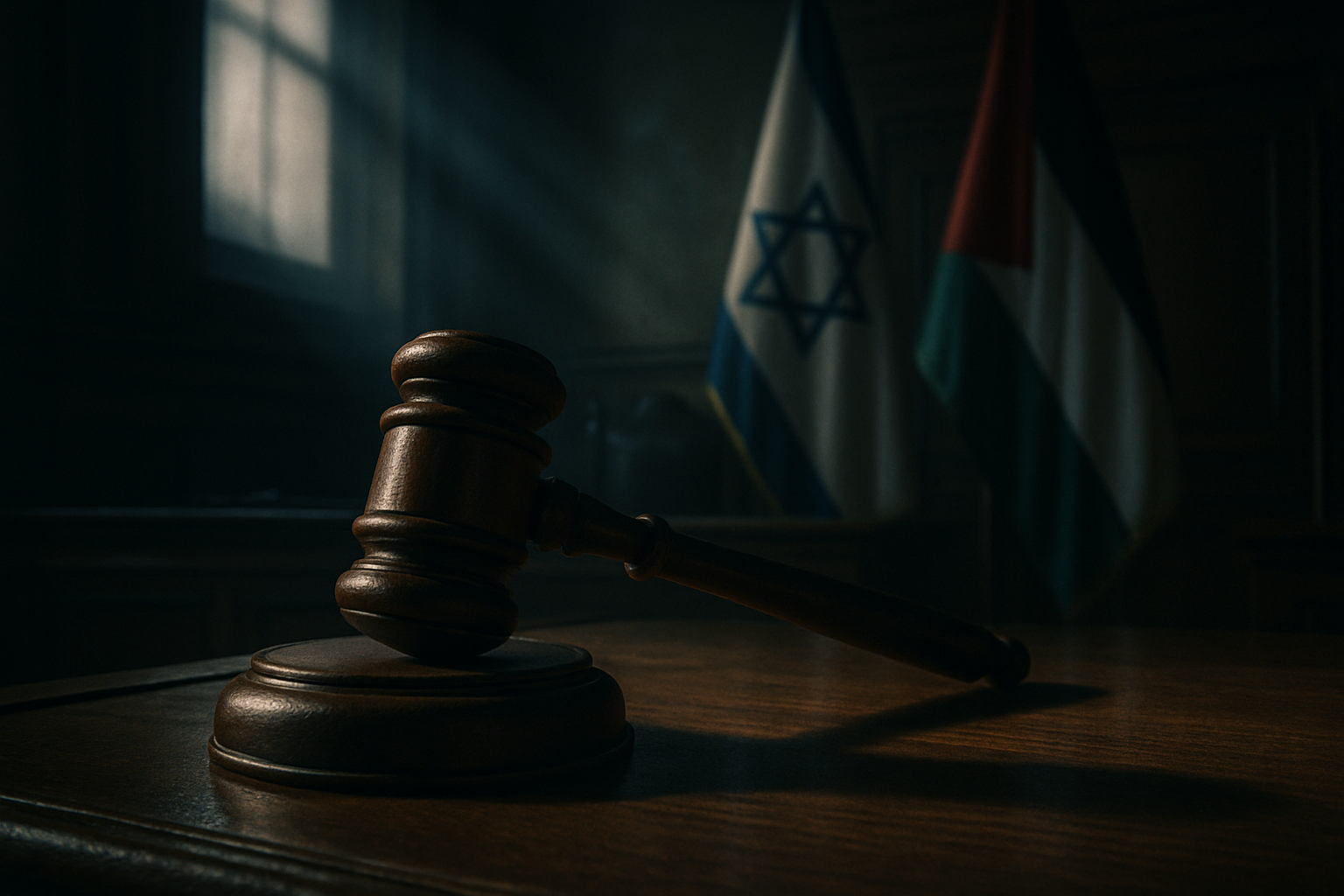
The International Criminal Court’s decision to issue arrest warrants for senior Israeli and Hamas leaders represents a watershed moment in the long-running Israel-Palestine conflict, marking the first time the court has targeted the head of a major US ally. The warrants, which are now formally in force, create a complex legal and diplomatic landscape that tests the limits of international justice and reshapes the calculus for travel and diplomacy for those accused.
The Core of the Charges: What the ICC Alleges
The warrants, issued by the ICC’s Pre-Trial Chamber I, are rooted in specific allegations of war crimes and crimes against humanity linked to the conflict since October 2023. The court has stated it found “reasonable grounds to believe” that the three individuals bear criminal responsibility for their actions.
For Israeli Prime Minister Benjamin Netanyahu and former Defence Minister Yoav Gallant, the charges stem from Israel’s military campaign in Gaza. Specifically, the court has alleged they bear responsibility for the war crime of starvation of civilians as a method of warfare and the war crime of intentionally directing attacks against the civilian population. They are also accused of the crimes against humanity of murder, persecution, and other inhumane acts.
On the Hamas side, the warrant targets Mohammed Deif, the commander of the Izz al-Din al-Qassam Brigades. He is accused of war crimes and crimes against humanity for his role in the planning and execution of the 7 October 2023 attacks on Israel. Those attacks, which involved the mass killing of Israeli civilians and the taking of hostages, form the core of the allegations against him.
The warrants were issued under Article 58 of the Rome Statute, the ICC’s founding treaty. It is important to note that an arrest warrant is a formal judicial step, not a conviction. The individuals are presumed innocent until proven guilty, and no trial has yet been scheduled. The warrants are a legal instrument to secure their presence before the court.
The Critical Question of Enforcement: A Legal Gamble
The most immediate and practical consequence of the warrants is not an arrest, but a fundamental change in the legal risks of international travel for Netanyahu, Gallant, and Deif. The ICC does not have its own police force; it relies entirely on the cooperation of its 124 member states.
For Netanyahu and Gallant, this means that any official or private travel to a country that is an ICC member state now carries the tangible risk of detention on arrival. This includes most of Western Europe, Canada, Australia, Japan, and much of Latin America and Africa. Conversely, travelling to non-member states like the United States, Russia, China, or Israel itself carries no such risk from the ICC.
This creates a significant diplomatic and operational problem for the Israeli leadership. Key state visits, international summits, and personal travel are now legally constrained. While it is unlikely a major ally like Germany or France would immediately arrest an allied head of government, the legal obligation now exists, placing those nations in a difficult position. They must balance their treaty obligations with their bilateral diplomatic relationships.
For Mohammed Deif, the warrant is largely symbolic in terms of enforcement. He is believed to be operating within Gaza, which is not controlled by an ICC member state, or potentially hiding elsewhere in the region. His capture and transfer to The Hague are seen as highly unlikely by most analysts.
The ICC has acknowledged this enforcement gap. The court’s success in this case hinges on political will and diplomatic pressure. The warrants are a test of whether the international legal system can hold the most powerful individuals accountable, even when those individuals are leaders of a state with significant geopolitical backing.
A Clash of Jurisdictions: The Core Legal Dispute
The warrants have ignited a fierce debate over the ICC’s jurisdiction in this matter. Israel is not a party to the Rome Statute and has never accepted the ICC’s authority. The Israeli government’s position is that the court has no jurisdiction over its actions, arguing that the Palestinian Authority is not a sovereign state and therefore could not confer jurisdiction upon the court.
The ICC’s legal basis rests on the fact that the State of Palestine lodged a declaration accepting the court’s jurisdiction since 13 June 2014 and later officially acceded to the Rome Statute. In 2021, the ICC’s Pre-Trial Chamber ruled that the court could exercise jurisdiction over the Palestinian territories, a decision that the Israeli government has consistently rejected.
This jurisdictional dispute is not merely a legal technicality; it is the central political battleground. The ICC’s decision to proceed is a powerful statement that it considers the legal status of Palestine to be sufficient to bring charges against a non-member state’s leader. Critics of the court argue this oversteps its mandate and politicises international justice, while supporters see it as a necessary step to ensure accountability where domestic systems have failed.
Timing and Context: A Two-Year Pursuit
The path to these warrants has been long and highly contentious. The ICC Prosecutor, Karim A. A. Khan KC, announced on 20 May 2024 that he was filing applications for arrest warrants for the same three individuals. This announcement itself was a seismic event, drawing immediate and widespread condemnation from Israel and the US, and praise from human rights organisations and Palestinian authorities.
The court’s Pre-Trial Chamber I then spent months reviewing the voluminous evidence presented by the prosecution. The issuance of the warrants on 21 November 2024, five months after the application, indicates that the chamber found the evidence sufficient to meet the low threshold of “reasonable grounds to believe.”
The ongoing conflict has continued to evolve since the applications were filed. Gallant has since left his post as Defence Minister in Israel, a detail that does not affect the ICC warrant but does change the political dynamics. The ICC’s prosecutorial team has also publicly stated that their investigations in the “Situation in the State of Palestine” remain active and that they may seek further warrants, though they have officially denied media rumours about new applications in 2026.
International Reactions: A Deepening Divide
The world’s reaction to the warrants has been predictably polarised, mirroring the deep divisions over the conflict itself.
Israel has reacted with fury and defiance. Prime Minister Netanyahu’s office has condemned the warrants as an “absurd” and “antisemitic” act that equates a democratic state with a terrorist organisation. The government has vowed to continue its military operations and to ignore the court’s legal findings. The Israeli opposition, while critical of Netanyahu domestically, has largely united in rejecting the ICC’s jurisdiction.
The United States, a key ally of Israel and not an ICC member, has also strongly criticised the move. The US administration has stated that the ICC does not have jurisdiction over the matter and has expressed concern that the warrants will hinder efforts to reach a ceasefire and secure the release of hostages. Washington has previously threatened sanctions against ICC officials over investigations into US and Israeli personnel.
Palestinian authorities and human rights organisations have welcomed the warrants. The Palestinian Foreign Ministry has called it a “historic victory for justice” and a sign that the world will not stand by while war crimes are allegedly committed against the Palestinian people. Amnesty International and Human Rights Watch have urged ICC member states to fully cooperate with the court and enforce the warrants.
European Union member states have been more divided. While the EU is broadly supportive of the ICC, governments have taken differing stances. Some, like France and Germany, have stated they respect the court’s independent decision but have not committed to arresting Netanyahu if he visits, citing the need for diplomatic relationships. Others, like the Netherlands and Belgium, have explicitly stated they will enforce the warrant. This lack of a unified stance weakens the potential impact of the warrants.
What This Means for the Conflict: Beyond the Courtroom
The immediate impact of the warrants on the ground in Gaza and Israel is expected to be minimal. The war, which has already caused a catastrophic humanitarian crisis and a massive loss of life according to local health authorities, continues. The warrants do not impose a ceasefire or alter the military calculus.
However, the long-term implications are profound. The warrants place the actions of the Israeli government under a formal, ongoing international legal cloud. They legitimise the narrative that Israel’s military campaign may constitute international crimes. This can have a chilling effect on international military cooperation and arms sales. Countries that are party to the ICC and have been supplying arms to Israel now face increased legal and political pressure to halt those sales.
For the Hamas leadership, the warrant solidifies their classification as internationally wanted individuals, but its practical effect is limited given their operational environment.
The warrants also risk further entrenching positions. For many Israelis, the ICC is seen as a biased, politically motivated body that targets their country while ignoring hostile actors like Iran. This perception can strengthen domestic support for a hardline government. For many Palestinians, the warrants are a long-overdue step toward accountability, but they also underscore the immense gap between legal recognition of crimes and actual justice for victims.
The Charter of the Future: What Happens Next
The next phase of this story will be defined by politics, not just law.
For the ICC, the immediate priority is to seek cooperation from member states. The court will monitor the travel of Netanyahu and Gallant and will likely issue confidential alerts to relevant states. A major diplomatic incident would occur if, for example, Netanyahu travels to a country like the UK and is arrested on arrival. The court’s credibility is now on the line—if member states routinely fail to enforce the warrants, the ICC’s authority will be severely damaged.
For Israel, the government will likely pursue a dual strategy. Domestically, it will rally support and condemn the court. Internationally, it will launch a diplomatic offensive to shore up support from allies, particularly the US, to provide diplomatic cover and potentially work to undermine the ICC through political pressure or even sanctions.
For the international community, the warrants force a difficult choice between respecting the rule of law and maintaining strategic alliances. Many countries will be forced to publicly clarify their positions on whether they would detain the Israeli leaders. This could lead to a new wave of diplomatic tensions and re-evaluations of bilateral relations.
Ultimately, the arrest warrants are a powerful symbol of the reach--and the limits--of international law. They demonstrate that the ICC can take the unprecedented step of charging a sitting head of government from a powerful nation. Yet the warrants also highlight the court's fundamental weakness: its dependence on the political will of states to enforce its decisions.
The world now watches to see if the promise of “never again” will hold for those accused of the most serious crimes, or if political power will ultimately prove to be the final arbiter of international justice. The outcome of this test will shape the credibility of the International Criminal Court for a generation.