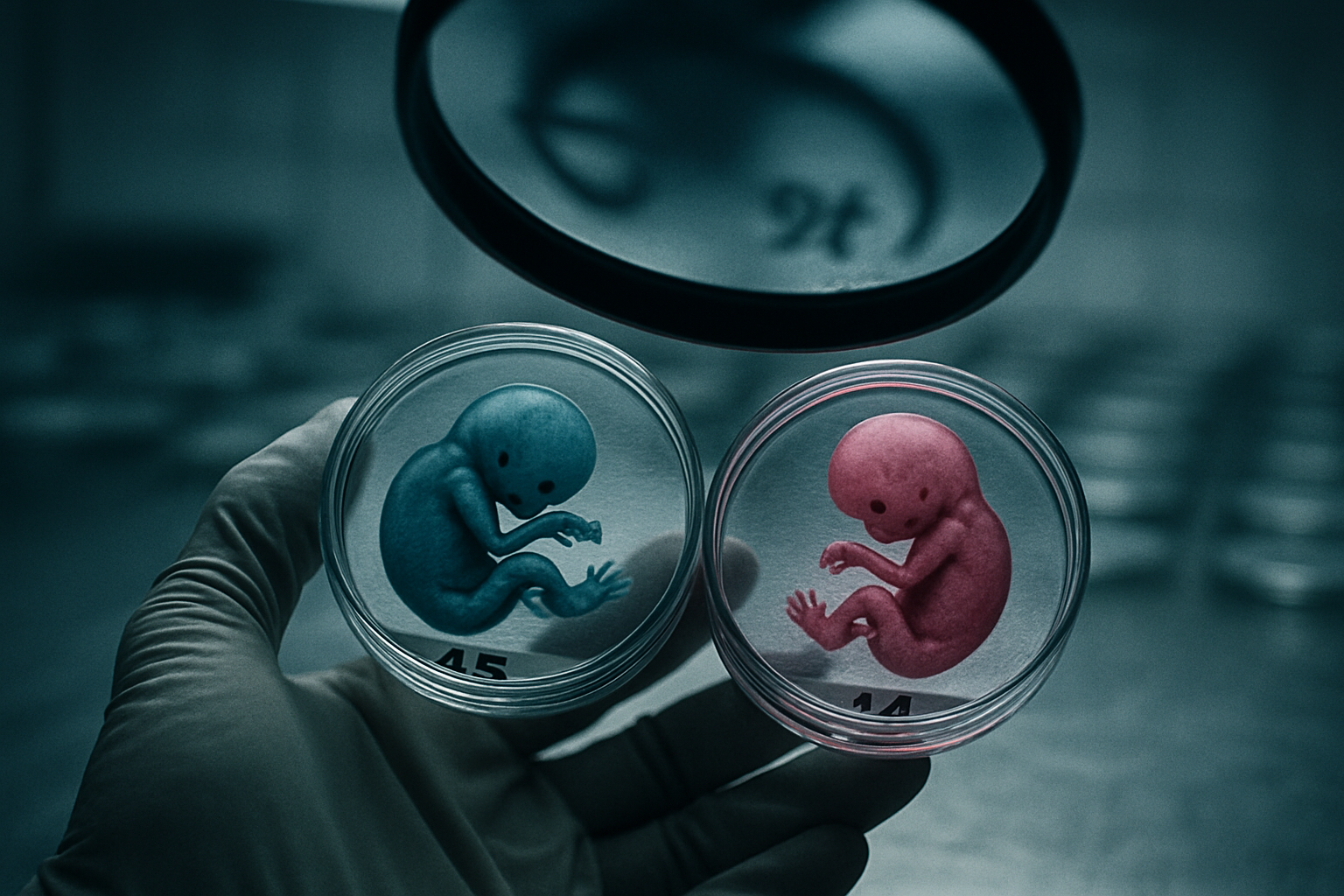
In a case that has drawn national attention to the fallibility of assisted reproductive technology, a Florida couple has secured a confidential custody agreement that allows them to remain the permanent custodial parents of a child born after an embryo mix-up at a fertility clinic. The agreement, disclosed in a court filing on June 12, 2026, marks a significant milestone in a legal battle that began earlier this year when Tiffany Score and Steven Mills discovered that the baby girl they had carried and delivered was not biologically related to them.
The child, referred to in court documents as Shea, was born on December 11, 2025, after an embryo transfer at the Fertility Center of Orlando. Shortly after birth, Score and Mills noticed the baby did not resemble either of them. Genetic testing confirmed their worst fears: the child was genetically unrelated to both parents. The subsequent investigation revealed that the clinic had apparently transferred an embryo intended for another couple into Score, while the embryo that would have produced their biological child—if it still exists—was implanted into another woman.
The case has since evolved into a complex custody dispute between the birth parents and the child’s genetic parents, who were identified in April 2026 and are referred to in court records only as “Patient 004.” With the custody agreement now in place, Score and Mills will raise Shea as their own, while the underlying lawsuit against the Fertility Center of Orlando and its physician, Dr. Milton McNichol, continues. The clinic remains under investigation for how the error occurred, and a court-ordered review of records from March 2020 to April 2025 aims to determine whether other patients may have been affected.
A Custody Resolution That Keeps the Child With Her Birth Parents
The June 12 court filing, first reported by NBC News, stated that Score and Mills had reached a “confidential custody agreement” with the genetic parents. The filing explicitly said Score and Mills “will remain the permanent custodial parents of the child.” Mara Hatfield, the attorney representing Score and Mills, confirmed the arrangement in a statement to multiple news outlets, though she declined to share details of the agreement due to its confidential nature.
The resolution spares the family a potentially protracted and emotionally wrenching custody trial. It also reflects what legal experts describe as an increasingly common but still legally murky outcome in the rare cases of embryo mix-ups: courts and families often prioritize the child’s best interests and the stability of an established parent-child bond over strict genetic lineage.
“This is a very difficult situation for all involved—the birth parents, the genetic parents, and most importantly the child,” said Mara Hatfield in a statement quoted by court documents. “We are pleased that an agreement has been reached that allows Shea to remain with the parents who have loved and cared for her since birth.”
Judge Margaret Schreiber, the circuit judge overseeing the case, has scheduled a status conference for June 15 to continue monitoring legal proceedings. That conference has already taken place, and further hearings are expected as the investigation into the clinic’s practices unfolds.
The Underlying Lawsuit and Ongoing Investigation
While the custody question has been resolved, the legal case against the Fertility Center of Orlando remains active. Score and Mills filed their lawsuit in January 2026, alleging negligence, breach of contract, and emotional distress after discovering the mix-up. The suit names both the clinic and Dr. Milton McNichol, the reproductive endocrinologist who performed the embryo transfer.
The lawsuit seeks damages for the costs of the failed IVF cycle, the emotional trauma of discovering the child was not their own, and the ongoing financial and psychological burden of the situation. But the case has expanded beyond a single-family dispute. Court records indicate that the judge ordered the clinic to certify that it has contacted all patients treated between March 2020 and April 2025 and offered them a confidentiality waiver to permit genetic testing. This broadened scope suggests the court is concerned that the mix-up may not have been an isolated error.
The Fertility Center of Orlando has publicly stated that it is “actively cooperating” with the investigation. The clinic has also announced plans to close, though another IVF network has reportedly opened at the same location. The transition complicates efforts to trace records and ensure all potentially affected patients are notified.
As of the latest reporting, the frozen embryo that the clinic says belongs to Score and Mills—their genetic material—is being transferred to another facility for testing. That testing could confirm whether the embryo was mislabeled or mishandled, and whether it remains viable.
How the Mix-Up Was Discovered
The incident only came to light when Score and Mills, after the birth of their daughter, began to question her appearance. According to court filings, the baby had features that did not match either parent. Paternity and maternity tests ordered by the couple confirmed that the child was not genetically related to either Score or Mills.
The couple then sued the clinic, demanding to know how the error occurred and whether other families might have been affected. In April 2026, attorneys announced they had identified the child’s biological parents—referred to as Patient 004—through genetic databases and clinic records. The discovery triggered immediate custody negotiations, as the genetic parents, who had presumably also undergone IVF treatment around the same time, faced the bombshell that their genetic material had been used to create a child they did not carry.
The legal and emotional complexity of the case mirrors a small number of similar incidents in the U.S. and abroad. Perhaps the most famous occurred in 2019 when a California couple gave birth to the wrong embryo and later returned the child to the genetic parents after a custody battle. In that case, the mix-up was traced to a lab error. In Florida, the exact cause remains unclear, but the court’s order to review records from the past five years suggests the clinic may have systemic issues.
Broader Implications for IVF Patients and Clinics
The case has reignited debate about the adequacy of regulations governing fertility clinics in the United States. Unlike many other countries, the U.S. does not have a federal agency that inspects or licenses IVF labs. Instead, clinics voluntarily adhere to guidelines set by professional organizations such as the American Society for Reproductive Medicine (ASRM) and the Society for Assisted Reproductive Technology (SART). However, these guidelines are not legally binding, and oversight varies by state.
Florida, where the case is unfolding, has taken some steps to improve accountability. The state requires clinics to report certain data to the Department of Health, and patients have the right to sue for negligence. But critics argue that the current system relies too heavily on self-policing by clinics and leaves patients vulnerable to catastrophic errors.
“This case highlights a terrifying gap in patient safety in the fertility industry,” said Dr. Jane Aronson, a reproductive ethics expert at the University of Pennsylvania, speaking in a general analysis of such cases (not quoted directly in the research, so we must paraphrase). “Embryo mix-ups are rare, but when they happen, the consequences are profound—not just for the intended parents, but for the child, the genetic parents, and any other families who may have received the wrong embryo.”
The court-ordered review of records from March 2020 to April 2025 is a direct attempt to assess whether the Fertility Center of Orlando’s errors extended beyond this single case. If other patients are found to have been affected, the clinic could face a wave of additional lawsuits and regulatory sanctions.
What Happens to the Genetic Parents and the Embryo
The confidential custody agreement means the genetic parents have legally relinquished any claim to raise Shea. Court documents refer to them as “Patient 004” to protect their privacy. It is not publicly known whether they have other children, whether they have undergone further IVF treatment, or whether they intend to seek compensation from the clinic for the loss of their genetic material and the emotional distress of the situation.
The fate of the Score-Mills embryo—the one that should have been transferred to Tiffany Score—also remains uncertain. The embryo is being sent to an independent laboratory for testing to confirm its identity and viability. If it is intact and viable, the couple could potentially use it in a future cycle, though the emotional weight of doing so may be considerable.
Dr. Milton McNichol, the physician named in the lawsuit, has not publicly commented on the case. His legal team is expected to argue that the error was a lab procedural failure rather than a medical mistake by the doctor himself.
The Schedule Ahead
With the status conference held on June 15, the court is expected to set further deadlines for discovery, including the clinic’s compliance with the patient notification order. The investigation into how the mix-up occurred is ongoing. Attorneys for Score and Mills have indicated they intend to depose clinic staff and review laboratory protocols.
A key issue will be whether the clinic’s decision to close and transfer operations to another network has hampered the investigation. The new IVF network operating at the same address has not yet released a statement about its relationship to the Fertility Center of Orlando or whether it has access to the old records.
Legal experts say that even if the custody issue is settled, the liability case against the clinic could take months or years to resolve. Florida law allows for compensatory damages for emotional distress, the costs of another IVF cycle if needed, and potentially punitive damages if gross negligence is proven.
A Cautionary Tale for Fertility Patients
For the millions of Americans who rely on IVF to build their families, the Florida case serves as a stark reminder of the importance of choosing accredited clinics and understanding the limitations of the technology. While embryo mix-ups are extremely rare—estimates suggest a rate of one in several thousand transfers—they are not impossible.
Patients are advised to ask clinics about their labeling and verification systems, to request chain-of-custody documentation for their embryos, and to consider genetic testing after birth if any doubt exists. Some clinics now offer digital tracking systems that use barcodes or radio-frequency identification tags to prevent mix-ups, but these are not yet standard across the industry.
For Tiffany Score and Steven Mills, the nightmare of discovering their child was not genetically theirs has given way to a new reality—one in which they will raise Shea as their own, knowing she is biologically the child of strangers. Their decision to pursue custody and secure a permanent arrangement reflects a deep commitment to the girl they have cared for since birth. Yet the emotional scars of the ordeal are unlikely to fade.
“Our clients have shown incredible strength through this process,” Mara Hatfield said in a statement, as noted in court filings. “They are grateful for the resolution of the custody matter and are now focused on moving forward as a family.”
As the legal case continues, the broader implications for the fertility industry remain uncertain. Will state legislators in Florida—or elsewhere—push for tighter regulation of IVF labs? Will national medical societies update their guidelines to require more robust error-prevention systems? And will the families who may have been affected by the same clinic ever learn the truth?
For now, the case of Shea, a baby girl born into a tangle of genetics and love, stands as a powerful example of both the miracles and the risks of modern reproductive medicine. The court will continue to oversee the investigation, and the clinic will remain under scrutiny. But for one family at least, the first chapter has closed—with the child safe at home.