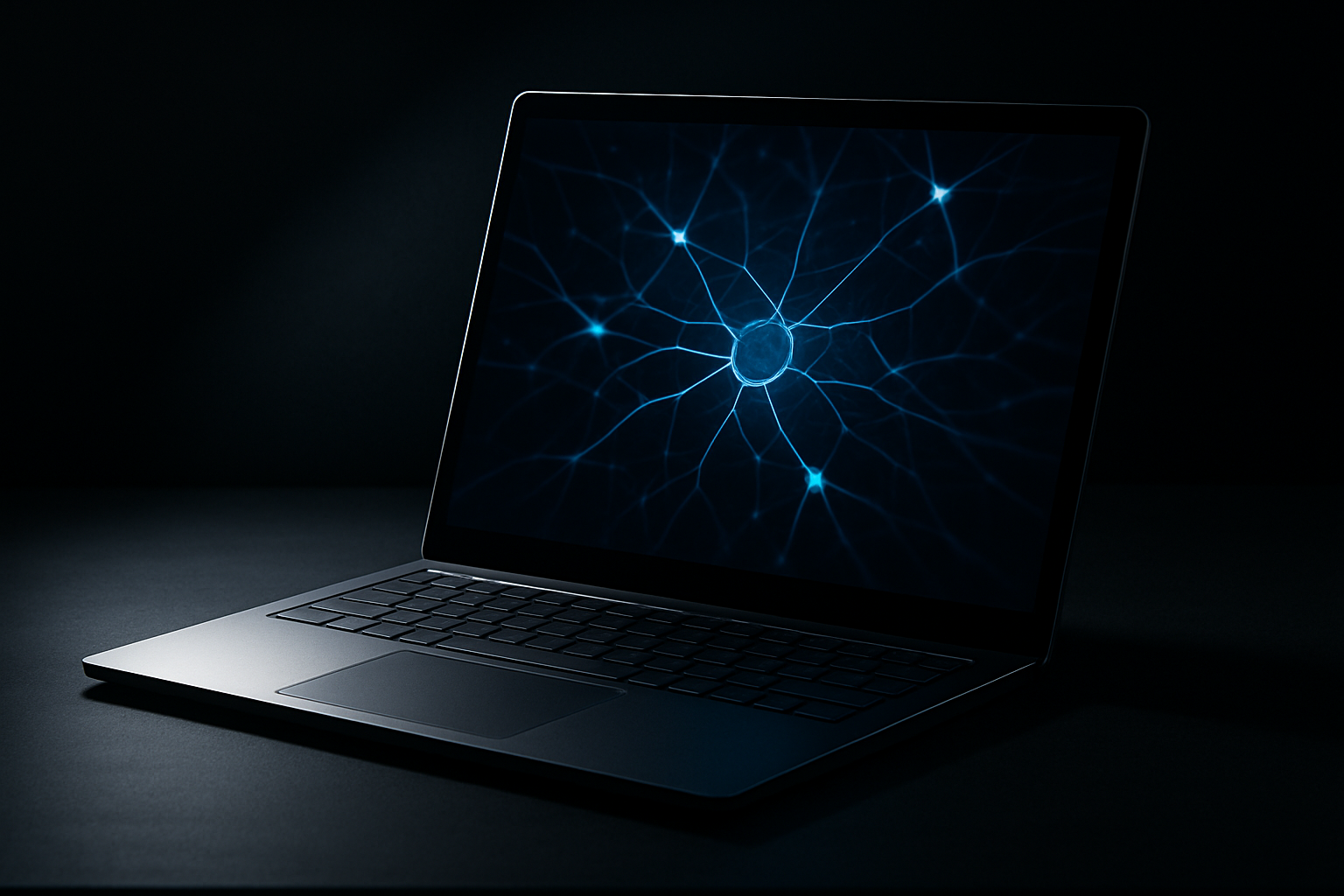
Microsoft launches new AI-powered Surface Laptop lineup with Copilot+ features
The era of the AI personal computer is no longer a promise on a roadmap. On June 16, 2026, Microsoft began shipping a fully refreshed Surface Laptop line it is marketing as “Copilot+ PCs,” powered by Qualcomm Snapdragon X2 processors and, in some business configurations, Intel Core Ultra chips. The new devices represent Microsoft’s most aggressive push yet to embed artificial intelligence directly into the hardware—not as an optional cloud service, but as a local, always-on capability running on dedicated neural processing units (NPUs) that deliver more than 40 trillion operations per second.
Available immediately for consumers at prices starting at $1,599, the new Surface Laptop marks a significant price jump from the 2024 “Surface Laptop 7 Edition,” which launched at $999. Microsoft is positioning the higher price as a reflection of the AI-first architecture, with 16 GB of RAM now standard on most models—a baseline the company argues qualifies these machines for a “different class of Windows experiences” tied to Copilot+. For businesses, the Surface for Business variants go on sale from July 14, and a high-end Surface Laptop Ultra aimed at developers and creative professionals is expected later in 2026.
The launch is not just a device refresh. It is a strategic bet that the next computing cycle will be defined not by raw processor speed but by how well a machine runs AI workloads locally. Microsoft’s message is clear: if you want the full Windows 11 Copilot experience—features like Cocreator for image generation, Windows Studio Effects for real-time video enhancements, and automated task management without sending data to the cloud—you need a Copilot+ PC. And the new Surface Laptop is the flagship vehicle for that vision.
What is happening right now
As of mid-June 2026, the new Surface Laptop lineup is in launch and ramp-up mode. Consumer devices powered by Qualcomm Snapdragon X2 processors are on sale and shipping. Reviews are appearing in technology publications, and the devices are being positioned on Microsoft’s storefront alongside a new Surface Pro tablet that also uses the same Snapdragon X2 platform.
The lineup offers two primary screen sizes: a 13.8-inch model and a 15-inch model, both featuring the signature 3:2 aspect ratio display that Microsoft has favored in past Surface products for productivity. The company’s own internal testing, conducted in April 2026 using 3DMark Steel Nomad and video playback scenarios, claims battery life of up to 20 hours on the 13.8-inch version and 19 hours on the 15-inch version with Snapdragon X2. Those numbers, while achieved in controlled test environments, suggest a serious effort to compete with Apple’s M-series MacBook Air and MacBook Pro on endurance.
The business variants, which include both Snapdragon X2 and Intel Core Ultra (Series 2) options, will start shipping on July 14. Notably, Microsoft is offering a 5G-enabled 13.8-inch Surface Laptop with Intel Core Ultra for enterprise customers who prioritize cellular connectivity and legacy x86 compatibility over Arm-based efficiency. This dual-platform approach gives businesses flexibility, but it also underscores a lingering tension in the Copilot+ PC strategy: the most advanced AI features rely on the NPU performance of the Snapdragon chips, while Intel-based models may not deliver the same AI experience.
Pricing has drawn attention. The base model starts at $1,599 MSRP, a steep increase from the $999 starting price of the 2024 Surface Laptop 7 Edition. Microsoft is effectively repricing the Surface line upward, arguing that the Copilot+ hardware—including the NPU, higher RAM, and optimized thermal design—justifies the premium. High-end configurations with additional RAM and storage will push the price well above $2,000, placing the Surface Laptop in direct competition with Apple’s MacBook Pro lineup. The forthcoming Surface Laptop Ultra is expected to target developers and creative professionals who need even more local AI compute power, though no specific release date or pricing has been announced yet.
Why it matters: The AI PC inflection point
Microsoft has been explicit in its messaging: 2026 is the year the “AI PC” becomes a real category, and the new Surface Laptop is the embodiment of that strategy. The company has defined Copilot+ PCs as those with an NPU capable of at least 40 TOPS (trillions of operations per second), enabling AI tasks to be processed locally rather than in the cloud. This matters for several reasons.
First, local AI processing means latency is reduced—Copilot can respond to voice commands, generate images, or apply real-time filters to video calls without waiting for a round trip to a data center. Second, it enhances privacy: sensitive data such as call transcripts, photo edits, or document summaries never leave the device. Third, it unlocks features that would be impractical over the cloud, such as continuous background automation or real-time language translation on a video stream.
For Microsoft, the Copilot+ PC strategy is also a way to reassert control over the Windows ecosystem. In recent years, the PC market has been dominated by Intel and AMD chips, with Windows running on a vast array of OEM hardware. By designing its own Surface devices around Qualcomm’s Arm-based Snapdragon chips, Microsoft can optimize the software-hardware integration in a way that third-party manufacturers may find difficult to replicate. The Surface Laptop becomes the reference design for what a Copilot+ PC should look like, from the keyboard and trackpad feel to the thermal management that sustains NPU performance over long work sessions.
The timing is also significant. Apple has had almost six years to refine its M-series chips, and the MacBook lineup is widely regarded as the gold standard for efficiency and performance in thin-and-light laptops. Microsoft’s Surface Laptop has struggled to match that perception, especially after the departure of longtime Surface chief Panos Panay in 2023. The Copilot+ narrative gives Microsoft a distinct story that Apple cannot yet tell: a deeply integrated AI assistant that runs locally on every device, powered by the same NPU and OS-level features. Whether that story convinces consumers to pay $1,599 or more remains to be seen.
Background and context: From “Surface Laptop 7” to Copilot+ PC
The journey to this launch has been several years in the making. Microsoft first introduced the Surface Laptop in 2017 as a premium alternative to traditional laptops. Over successive generations, the line improved in build quality, display, and performance, but it never quite escaped the shadow of the MacBook Air. The introduction of Arm-based Surface devices began in 2019 with the Surface Pro X, which used a custom Qualcomm processor—but software compatibility issues plagued that earlier effort, limiting its appeal.
In 2024, Microsoft launched the Surface Laptop 7 Edition, which was the first to use Qualcomm’s Snapdragon X Elite chip. That device was well-reviewed for battery life and performance, but the AI capabilities were still nascent. The Copilot assistant was cloud-dependent, and the NPU was not powerful enough to run the full range of on-device AI features that Microsoft had envisioned.
With the Snapdragon X2, the NPU crosses the 40 TOPS threshold, allowing Microsoft to enable features such as Cocreator, which generates images based on a user’s sketch and text prompt, and Windows Studio Effects, which can blur backgrounds, maintain eye contact, and apply lighting adjustments in real time during video calls. These features are not merely gimmicks—they are the first wave of what Microsoft calls “Copilot+ experiences,” which the company says will evolve to include contextual task automation, meeting summaries, and intelligent file search across the local device and cloud-connected accounts.
The shift to 16 GB of RAM as standard is also a break from the past. In 2024, many Surface Laptop 7 Edition models still shipped with 8 GB, which was insufficient for running local AI models alongside typical multitasking. Microsoft’s own marketing materials now describe 16 GB as the line of demarcation between a “faster” laptop and one that qualifies for the full Copilot+ experience. This has implications for the broader PC market: if Microsoft is setting 16 GB as the baseline for AI PCs, it could pressure other OEMs to follow suit, potentially increasing the average selling price of Windows laptops across the board.
Impact and implications: What the launch means for different stakeholders
For consumers, the new Surface Laptop offers a glimpse of a future where the computer proactively helps with tasks rather than waiting for commands. But that future comes at a cost. The $1,599 starting price is a barrier for many buyers, especially compared to the $999 MacBook Air M4 or the $899 starting price of last year’s Surface Laptop 7 Edition. For now, the AI features are novel but not yet essential for most users. Microsoft will need to demonstrate that Cocreator, Windows Studio Effects, and Copilot’s context-aware assistance genuinely save time or improve creativity compared to using cloud-based tools.
For businesses, the Surface for Business lineup launching in July offers a more pragmatic choice. The inclusion of Intel Core Ultra models with 5G connectivity signals that Microsoft understands enterprise concerns about Arm compatibility. Many businesses still rely on x86 applications that have not been emulated efficiently on Arm chips. By offering both Snapdragon X2 and Intel options, Microsoft provides a bridge: early adopters can choose the AI-first Arm devices for tasks that benefit from local AI, while more conservative buyers can stick with Intel and still get some AI capabilities, albeit likely less advanced.
For competitors, the launch ratchets up pressure. Apple has not yet announced a Mac with a similarly capable local NPU for AI tasks, though the M4 chip does include a neural engine that can handle inference. Microsoft is implicitly arguing that the Mac’s AI capabilities are limited by Apple’s cloud-dependent approach. Meanwhile, Windows OEMs like Dell, HP, and Lenovo will be watching closely. They have already begun releasing Copilot+ PCs using Snapdragon X2 and Intel chips, but none have the same tight hardware-software integration as Microsoft’s own Surface lineup. The Surface Laptop sets a benchmark for build quality, display, and battery life that OEMs will need to match or exceed to compete on the “AI PC” shelf.
For developers, the Surface Laptop Ultra—expected later in 2026—is positioned as a workstation-class machine for building AI applications. Microsoft’s broader message to developers is that the Copilot+ platform will provide APIs and tools to create custom AI agents that run on the local NPU. This could spur a new ecosystem of Windows-based AI applications, reminiscent of the early days of the iPhone app store. However, the small market share of Arm-based Windows devices remains a chicken-and-egg problem: developers may hesitate to invest in native Arm AI apps until a critical mass of users exists.
Different perspectives: Praise and caution
Technology analysts have greeted the launch with a mix of enthusiasm and skepticism. Supporters point to the impressive battery life, the smooth integration of Copilot, and the fact that Microsoft is finally delivering on a promise made years ago at the Build developer conference about “AI that runs on every device.” The 40+ TOPS NPU is a genuine achievement, and the real-time AI features work well in demos.
Critics, however, note that the AI features are still limited in scope. Cocreator, while fun, is not yet a replacement for Adobe Photoshop or Dall-E. Windows Studio Effects are useful for video calls but are increasingly standard on MacBooks and even some Chromebooks. The most impactful AI features—such as automatic task automation that learns user habits—are still in development. Without them, the $1,599 price point feels steep for what is essentially a very good laptop that happens to have a fast NPU.
There is also the question of ARM compatibility. While Microsoft has improved x86 emulation on Snapdragon chips, some legacy apps and games still suffer performance penalties. The 5G-enabled Intel variant is aimed at solving this for business users, but it means those buyers will not get the full AI experience of the Snapdragon models. This fragmentation could confuse customers and slow adoption.
Battery life claims are also under scrutiny. Microsoft’s quoted 20 hours is based on internal tests using specific workloads. Real-world usage—especially with local AI inference running continuously—may drain the battery faster. Independent reviews in the coming weeks will provide a clearer picture.
Finally, the price increase is a bold move in a market where consumers have become accustomed to $1,000 laptops. Microsoft is betting that the AI features will justify the premium, but the company has struggled in the past to sell high-end Surface devices at scale. The Surface Book 3 and Surface Laptop Studio, while technically impressive, never achieved mass market adoption. The Copilot+ PC narrative might be the hook that finally makes the premium stick, or it could be a niche that only appeals to early adopters and enterprise buyers.
What happens next: Staged rollback and future hardware
The launch plan is staggered. Consumer shipments have begun, but the delivery pipeline is still ramping up. The Surface for Business variants will follow in July, and the high-end Surface Laptop Ultra is expected later in 2026. Microsoft has not yet confirmed whether the Ultra will use the same Snapdragon X2 or a higher-performance chip, nor its price. It is also possible that Microsoft will release a RTX Spark Dev Box—a local AI dev workstation—though that product is still in the roadmap phase.
In the longer term, Microsoft’s success with the Copilot+ PC strategy will depend on two factors: software and ecosystem. The company must deliver regular updates to Copilot that add meaningful new capabilities, not just incremental improvements. It must also convince developers to build native Arm AI apps that can exploit the NPU fully. If the app library remains thin, the hardware advantage will be wasted.
Microsoft is also betting that the Windows 11 platform, combined with Copilot, can close the gap with macOS in terms of user experience. The Surface Laptop is a beautiful piece of hardware, but Apple’s ecosystem benefits from tight integration between hardware, software, and services (iCloud, Apple Music, the App Store). Microsoft’s equivalent—Microsoft 365, OneDrive, and Edge—has improved but still lacks the seamless feel of Apple’s walled garden.
The next few months will be critical. If the new Surface Laptop reviews well, and if enterprise buyers show interest, Microsoft could establish the Copilot+ PC as a genuine category that competitors must emulate. If sales disappoint, the company may be forced to lower prices or accelerate the roadmap for the Surface Laptop Ultra to regain attention.
For now, Satya Nadella and the Microsoft Devices team have delivered a compelling vision of an AI-first PC. The question is whether the world is ready to pay for it.