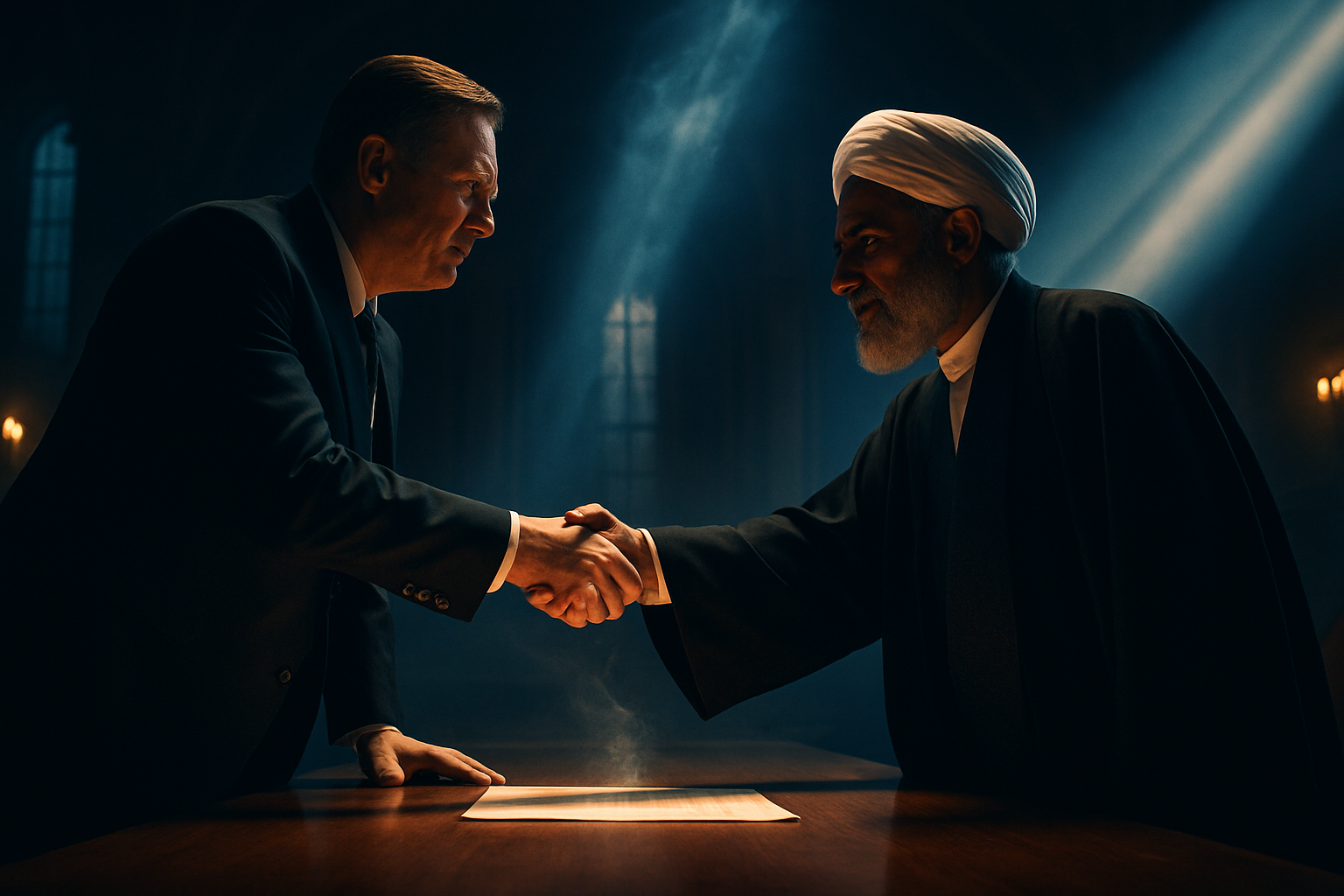
A Fragile Step: Inside the U.S.–Iran Preliminary Peace Deal
In a dramatic and contentious announcement, U.S. President Donald Trump declared this week that the United States and Iran have reached a “preliminary peace deal” and extended a ceasefire that has temporarily halted direct hostilities between the two nations. The claim, made in public remarks and amplified on social media, refers to a framework memorandum of understanding (MoU) agreed around June 15, 2026—a document that has paused active U.S.–Iran military engagements for 60 days and launched a formal negotiation track toward a broader peace agreement. However, as officials on both sides have stressed, this is far from a final, legally binding peace treaty, and the path ahead remains strewn with diplomatic landmines.
The MoU, electronically signed by President Trump, Vice President JD Vance, and Iranian parliamentary speaker Mohammad Bagher Ghalibaf, has been described as “very vague” by U.S. officials. Yet it has already produced tangible effects: a suspension of direct attacks, initial steps toward reopening the strategically vital Strait of Hormuz, and an arrangement involving the International Atomic Energy Agency (IAEA) to eliminate Iran’s stockpile of highly enriched uranium. The agreement has also set in motion a $300 billion reconstruction initiative for Iran and the eventual lifting of “all” U.S. sanctions, though the precise sequencing remains murky.
This article examines what the preliminary deal actually entails, why it matters, the background that led to this moment, the polarized perspectives surrounding it, and what happens next as the 60-day clock ticks.
---
What Is Actually in the Preliminary Deal?
The MoU is not a comprehensive peace treaty but a framework designed to stop the fighting and create conditions for deeper negotiations. According to U.S. Vice President JD Vance, the document is “a page and a half” of initial commitments. Its core components, as described by U.S. and Iranian officials, include:
Ceasefire and Hostility Cessation: The agreement has halted direct U.S.–Iran attacks for a period of 60 days. Mediators and some U.S. officials have indicated the ceasefire also covers steps toward ending hostilities in Lebanon, where Israel and Hezbollah have been engaged in intense fighting.
Strait of Hormuz and Maritime Access: A phased reopening of the Strait of Hormuz has begun, with the lifting of the U.S. naval blockade on Iranian ports. Iran has agreed to allow commercial shipping to transit through the strait without fees for the 60-day period. After that, Iran and Oman—the key regional mediator—will consult with other Gulf states on longer-term management and maritime services.
Nuclear Measures: According to Vice President Vance, a “core element” of the MoU is an arrangement involving the IAEA and U.S. assistance to help Iran eliminate its stockpile of highly enriched uranium, coupled with legally verifiable commitments not to pursue nuclear weapons. The deal also includes a temporary moratorium on enrichment at higher levels and a framework for dealing with existing highly enriched uranium stockpiles during the 60-day period.
Sanctions and Economic Relief: CNBC reporting has described the framework as including a $300 billion reconstruction initiative for Iran and the eventual lifting of “all” U.S. sanctions. Trump has acknowledged that Iran would gain access to billions of dollars in frozen assets and would retain some right to enrich uranium and develop ballistic missiles—a stark contrast with earlier red lines drawn by his own administration.
Political Status: The document is explicitly a memorandum of understanding, not a final treaty. Trump has simultaneously promoted it as a deal that “ends the war” and reopens the Strait of Hormuz, while also stressing that it is not final and that he could “back out of the deal anytime,” even suggesting that if he dislikes the final terms, the U.S. could “go back to shooting at them, dropping bombs on their head.”
---
Key People and Their Roles
Donald J. Trump – President of the United States. He announced the peace deal publicly and claimed it would end the war and reopen the Strait of Hormuz. His statements oscillate between triumphalism and caveats about the deal’s preliminary nature.
JD Vance – Vice President of the United States. He publicly described the MoU as a “page and a half” preliminary document and explained the nuclear and IAEA component.
Mohammad Bagher Ghalibaf – Iranian parliamentary speaker. He is identified as the Iranian signatory of the electronic agreement.
Mediating Parties – Oman has played a central role as a regional intermediary, particularly regarding the reopening of the Strait of Hormuz and consultations with other Gulf states on maritime management.
---
Background and Context: How We Got Here
The path to this MoU was paved with years of escalating tensions, military exchanges, and failed diplomatic efforts. The U.S.–Iran conflict had been spiraling since the Trump administration’s withdrawal from the 2015 Joint Comprehensive Plan of Action (JCPOA) in 2018, followed by a campaign of “maximum pressure” sanctions and, later, direct military confrontations. The situation reached a critical point in early 2026 when the U.S. imposed a naval blockade on Iranian ports, and Iran responded by threatening to close or heavily tax shipping through the Strait of Hormuz—a chokepoint for about 20% of the world’s oil supply.
Open hostilities erupted, with tit-for-tat strikes in the Persian Gulf and in proxy theatres across the Middle East. The war caused severe disruptions to global energy markets, shipping, and regional stability. By mid-2026, both sides appeared exhausted and under domestic and international pressure to de-escalate. Oman, which has long served as a backchannel between Washington and Tehran, brokered secret talks that culminated in the June 15 MoU.
The deal’s contours represent a significant departure from earlier U.S. positions. Under the Trump administration’s original approach, Iran was expected to completely dismantle its nuclear program and ballistic missile capabilities before any sanctions relief. Now, the administration has accepted that Iran can retain some enrichment and missile development rights—conditions that critics have called a capitulation but supporters see as a realistic compromise to stop a costly war.
The agreement also comes amid a broader realignment in the region. The Israel–Hezbollah conflict in Lebanon, which has drawn in Iranian proxies and U.S. support for Israel, is explicitly linked to the ceasefire scope, suggesting a desire to stabilize multiple fronts simultaneously.
---
Different Perspectives: A Deal or a Disaster?
The preliminary deal has provoked sharply divergent reactions.
Supporters argue that it has halted a bloody and economically destructive war. Even a temporary cessation of hostilities is a humanitarian and strategic victory. The reopening of the Strait of Hormuz promises to lower global oil prices and restore normal shipping. The nuclear arrangement, while not as stringent as prior demands, brings IAEA inspectors in and begins the process of eliminating Iran’s most dangerous enriched uranium stocks. From a realpolitik standpoint, the deal gives both sides breathing room and a chance to negotiate a more durable peace.
Critics within the U.S., particularly among hawks in the Republican party and Israeli allies, denounce the agreement as a dangerous giveaway. They point to Iran’s retention of enrichment and missile rights, the massive financial injection via frozen assets and the reconstruction initiative, and the absence of any requirement to cease support for proxies. The MoU’s vagueness, they argue, allows Iran to pocket concessions while stalling on key issues. Trump’s own admission that he could walk away—or return to bombing—suggests the deal is fragile and may not survive a change in either country’s political winds.
Iranian hardliners also harbor deep suspicions. The agreement was signed by parliamentary speaker Ghalibaf, but Supreme Leader Ali Khamenei has not publicly endorsed it. Some Iranian factions view any compromise with the “Great Satan” as betrayal, and the temporary nature of the MoU raises fears that the U.S. will renege once Iran has complied with initial steps. The lifting of sanctions is tied to a process that could drag on, leaving Iran vulnerable.
Regional actors have mixed feelings. Saudi Arabia and the United Arab Emirates, while relieved at the prospect of lower tensions, are wary of Iran regaining economic strength and influence. Israel has reportedly expressed deep concern, viewing the deal as legitimizing Iran’s nuclear hedging. Oman and Turkey have praised the diplomatic breakthrough.
---
What Happens Next: The 60-Day Window
The clock is now ticking. Both sides have committed to 60 days of ceasefire and negotiations toward a final peace accord. The MoU lays out initial measures that are to be implemented during this period:
U.S. officials told CNN on June 18 that the 60-day period is underway and both sides have so far honored their commitments, including reduced hostilities and initial maritime steps. But the real test lies ahead.
Potential pitfalls include:
---
Why It Matters
The preliminary deal is not just a bilateral U.S.–Iran agreement; it has global ramifications. The Strait of Hormuz’s reopening will affect energy markets, shipping costs, and the economies of oil-dependent nations. The ceasefire in Lebanon could reduce civilian casualties and displacement. The nuclear arrangement sets a precedent for how the international community deals with proliferators while in active conflict.
More broadly, the MoU represents a test of whether diplomacy—implausible as it seemed just weeks ago—can succeed where war has failed. It also highlights the unpredictability of U.S. foreign policy under Trump, who has abandoned earlier maximalist demands in favor of a transactional, time-limited framework.
For Iran, the deal offers a path out of pariah status and crippling economic isolation—if the final terms are eventually honored. For the United States, it offers an off-ramp from an open-ended military commitment in the Middle East that was draining resources and attention from other global priorities.
---
Conclusion: A Door That May Not Stay Open
The preliminary U.S.–Iran peace deal and extended ceasefire are a significant diplomatic achievement—but only if they are a beginning, not an end. The MoU has stopped the shooting, eased a maritime crisis, and created a negotiating channel. But the 60-day window is both an opportunity and a countdown to potential failure.
All parties are projecting optimism, but the underlying mistrust remains deep. Trump’s contradictory statements—both celebrating the deal and threatening to junk it—reveal the fragility of any agreement built on a transactional foundation. Iran, for its part, has proven adept at exploiting American political divisions.
What happens in the next two months will shape the Middle East and global security for years to come. If the negotiations succeed, the world could witness the most significant U.S.–Iran rapprochement since the 1979 revolution. If they collapse, the region may slide into a wider war that no one can afford.
As of late June 2026, the door is open—but it could swing shut at any moment.