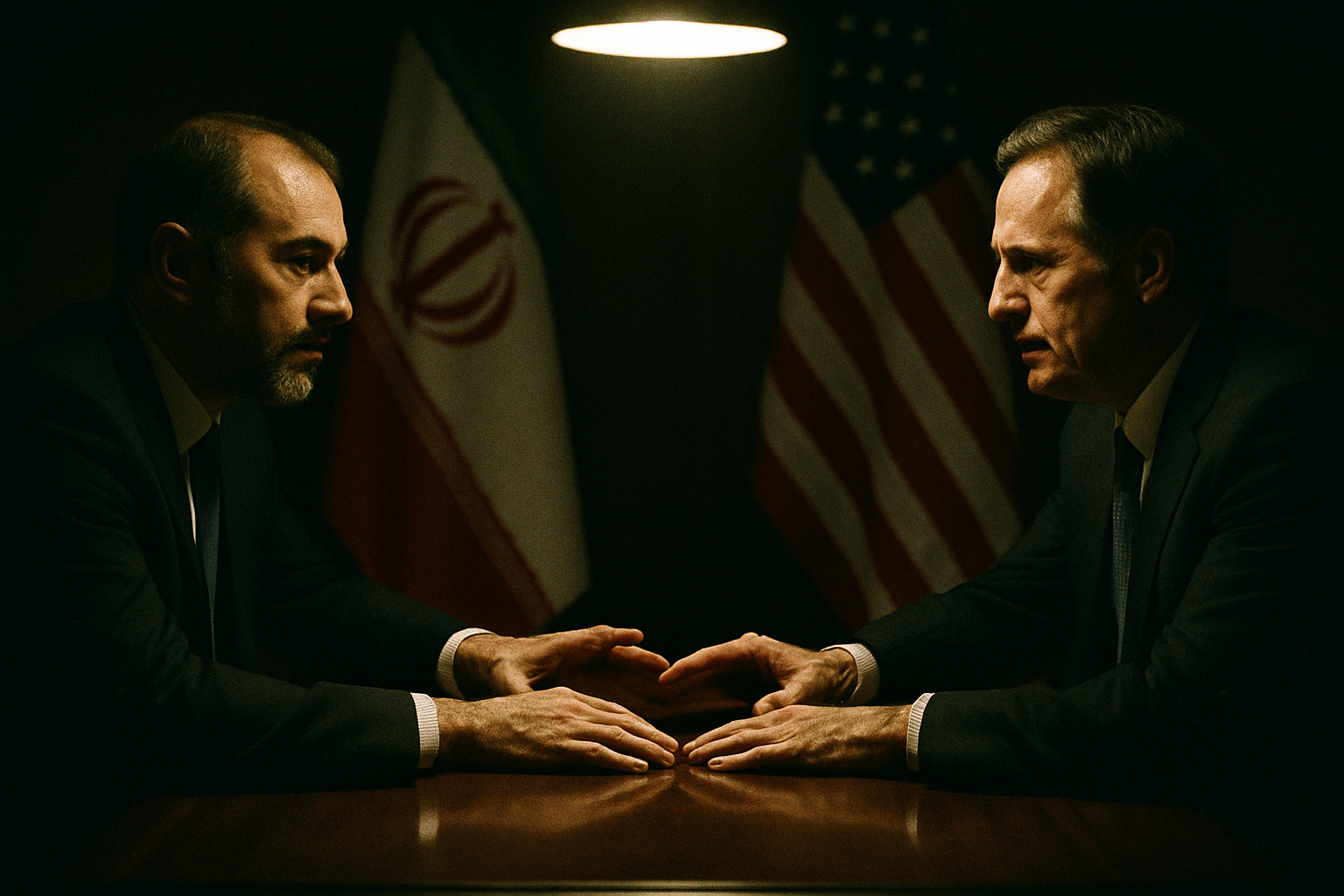
U.S. and Iran edge closer to announcing interim nuclear agreement
The United States and Iran have reached an interim framework that extends the current ceasefire for 60 days and is expected to be publicly finalized this week, according to multiple reports from June 15–18. The deal — described as a memorandum of understanding (MOU) rather than a final peace settlement — addresses a cessation of hostilities and the reopening of the strategic Strait of Hormuz to commercial shipping, but leaves the core question of Iran’s nuclear program to be negotiated in the follow-on talks.
The accord, which has been presented by U.S. President Donald Trump as an “excellent” agreement, marks the first tangible diplomatic breakthrough after months of armed conflict and stalled negotiations. However, the nuclear dimension — uranium enrichment levels, stockpile limits, and international safeguards — has been deliberately deferred, raising questions about whether the framework can hold without a resolution on the most contentious issue.
As of June 18, coverage describes the MOU as taking effect or being close to signature, with formal rollout expected in Switzerland on Friday. Pakistan’s Prime Minister Shehbaz Sharif, who has played a mediation role, is reported to have announced the planned signing ceremony. The simultaneous implementation of some terms — including the immediate resumption of oil and fuel sales by Iran under conditions — suggests the agreement is already being operationalized, even as the full text has not been publicly released.
The Framework: Ceasefire and Strait of Hormuz
At its core, the interim deal is a hostilities cessation and maritime arrangement. Under the reported terms, both sides have agreed to end military operations and lift the naval blockade that had effectively closed the Strait of Hormuz to commercial traffic. The strait, through which approximately 20% of the world’s oil and liquefied natural gas trade passes, had become a flashpoint in the conflict, with Iranian forces threatening shipping lanes and the U.S. Navy responding with escort operations.
The reopening of the strait is the most concrete deliverable in the MOU. Reuters, citing U.S. officials, reported that the deal would allow Iran to immediately initiate oil and fuel sales, along with related banking, transportation, and insurance services, subject to conditions. This provision is seen as a major concession by Washington, effectively normalizing Iran’s energy exports after years of sanctions — albeit under a temporary framework that could be reversed if nuclear talks fail.
Iran’s Supreme National Security Council has stated that military operations and the naval blockade should end immediately under the arrangement, according to coverage citing Iran’s Mehr News Agency. The draft framework is said to contain 14 points, though the full text has not been made public.
The deal extends the existing ceasefire by 60 days, providing a window for negotiations on the nuclear file. This time-limited structure means both sides face an implicit deadline: if no agreement on enrichment and stockpiles is reached by mid-August, the entire arrangement could unravel.
The Nuclear Question Unresolved
While the headlines emphasize a “nuclear agreement,” the research shows that the nuclear program is still unsettled. Reports from Reuters, BBC, and other outlets explicitly state that the parties have only agreed to continue negotiating uranium enrichment levels, stockpile sizes, and broader safeguards during the 60-day window. There is no mention of any specific cap being accepted or any IAEA inspection regime being reinstated.
This is the most fragile element of the framework. Iran’s enrichment program has advanced significantly since the collapse of the 2015 Joint Comprehensive Plan of Action (JCPOA), with estimates suggesting Iran now possesses enough near-weapons-grade material for several nuclear devices — though Tehran denies seeking a bomb. The Trump administration has insisted on dismantling that capacity, while Iran has demanded full sanctions relief in return.
The deferral of the nuclear issue is both a tactical compromise and a major risk. Proponents argue that separating the immediate conflict reduction from the longer-term nuclear negotiation was the only way to get a deal at all. Critics warn that Iran will use the 60 days to consolidate its nuclear gains and extract more concessions, while the U.S. loses leverage by lifting sanctions early.
The research notes that some reporting suggests up to $25 billion in frozen Iranian assets could be released depending on compliance, though this remains unconfirmed and tied to future negotiations. A separate leaked draft language mentioned a possible broader redevelopment figure of at least $300 billion in financing, but this is treated cautiously by major outlets until verified.
Key Players and Mediation
The agreement has multiple architects and backers. Donald Trump has publicly presented it as a diplomatic victory, saying the nuclear issue will be handled in follow-on talks. His administration has been under pressure to show progress after months of conflict that escalated following Iran’s blockade of the strait and U.S. retaliatory strikes.
Shehbaz Sharif, Prime Minister of Pakistan, is reported to have played a mediation role and announced the planned signing ceremony in Switzerland. Pakistan, which has historical ties to both Washington and Tehran, positioned itself as an interlocutor, hosting back-channel talks through its intelligence services. Sharif’s involvement signals the regional dimension of the agreement — Gulf states, Iraq, and Turkey have all pushed for de-escalation to avoid a broader war.
Iranian government officials and the Supreme National Security Council are involved on the Tehran side. Iran’s multi-layered decision-making — with the president, foreign ministry, and supreme leader all having a say — means that the deal’s implementation will test the internal consensus. Hardliners in the Islamic Revolutionary Guard Corps (IRGC) have previously opposed any negotiation with the U.S., though the reopening of the strait and resumption of oil sales are likely to be popular among the public and business interests.
U.S. officials cited by Reuters emphasized that the deal is conditional and reversible. Under the reported terms, Iran must refrain from attacks on shipping, halt support for armed groups in the region, and allow continued negotiations on nuclear safeguards. The U.S. retains the right to reimpose sanctions and resume military operations if those conditions are violated.
Economic Stakes and Sanctions
The economic implications are immediate. The reopening of the Strait of Hormuz will lower global oil prices, which had spiked during the blockade. For Iran, the ability to resume oil and fuel sales — even temporarily — provides a critical revenue stream after years of sanctions that cut exports from over 2 million barrels per day to roughly 300,000. The resumption of banking, transportation, and insurance services will further ease the economic pressure.
However, the unconfirmed figure of $25 billion in frozen assets and the broader $300 billion redevelopment figure point to the scale of the financial demands. Iran has long sought the release of funds frozen in foreign banks, primarily from oil sales prior to sanctions. The Trump administration has resisted releasing such funds without verifiable nuclear rollback, so the 60-day window is likely to be a period of intense bargaining on these financial terms.
The U.S. Treasury and State Department will need to issue waivers or licenses for transactions involving Iranian oil, which could face legal challenges from anti-deal members of Congress. The research does not indicate any congressional approval or consultation, suggesting the White House is acting under its executive authority, at least for the interim period.
Background and Timeline
The current negotiations are the product of a rapid escalation over the past year. After the collapse of the JCPOA in 2018, the Trump administration pursued a “maximum pressure” campaign, while Iran responded by breaching enrichment limits and expanding its program. By early 2026, the two sides were locked in a series of naval confrontations in the Gulf, with Iran threatening to close the Strait of Hormuz and the U.S. deploying additional carriers.
May 24, 2026: Reports indicated that the U.S. and Iran were nearing a broader peace agreement after months of conflict and stalled talks. This marked the first serious diplomatic contact since the JCPOA era.
Early June 2026: A draft framework began circulating, including demands on the Strait of Hormuz, nuclear material, sanctions, and support for armed groups. Iran reportedly submitted a draft to Washington on June 11.
June 15, 2026: Multiple outlets — including Reuters, BBC, and Al Jazeera — reported a preliminary agreement to stop hostilities and reopen the Strait of Hormuz. Trump said a time and place in Europe would be announced.
June 16, 2026: Reuters reported that the ceasefire accord would be publicly finalized soon, but the permanent truce and full nuclear terms still awaited negotiation.
June 18, 2026: Coverage describes the MOU as taking effect or being close to signature. The formal signing is expected in Switzerland on Friday, June 19.
The brevity of this timeline — roughly three weeks from draft to signing — underscores the urgency on both sides. Iran faces a crippled economy and growing public discontent; the U.S. wants to avoid a drawn-out conflict in an election year. But the rushed nature also raises the risk that critical details are left ambiguous.
Differing Perspectives
The framework has drawn mixed reactions from stakeholders.
Proponents argue that any deal that stops shooting and reopens shipping lanes is a net positive. The Washington Institute for Near East Policy has noted that the 60-day pause provides breathing room for diplomacy that was absent during the conflict. Regional powers like Saudi Arabia and the UAE, which rely on Gulf oil exports, are quietly supportive of reopening the strait.
Critics, particularly among Republican hawks and Israeli officials, warn that the agreement gives Iran a lifeline without addressing the existential nuclear threat. They point to the lack of any requirement for Iran to roll back enrichment or allow snap IAEA inspections. The framework, they say, is essentially a surrender to Iran’s maximalist demands, with the nuclear question punted to a deadline that Iran can exploit.
Iranian hardliners are also skeptical, viewing any negotiation with the U.S. as a betrayal of revolutionary principles. However, the immediate economic relief may quiet domestic opposition, at least temporarily. The Mehr News Agency’s positive framing suggests the Iranian establishment is willing to give the deal a chance — provided the 60-day talks deliver concrete results.
International observers note that the U.S. has significantly shifted its stance from demanding full nuclear dismantlement to accepting a temporary freeze. This could reflect a pragmatic recognition that unrealistic demands were blocking any progress. But it also sets a precedent that Iran can gain sanctions relief without fully complying.
What Happens Next
The next 60 days will be dominated by negotiations on the nuclear program — specifically, how much enrichment Iran can retain, how much stockpiled material it must ship out or down-blend, and what verification measures the IAEA can implement. The U.S. will also seek limits on Iran’s ballistic missile program and its support for proxies in Yemen, Syria, and Iraq, though the research does not mention those explicitly in the current framework.
The formal signing ceremony in Switzerland is expected to involve senior diplomats from both sides, with Pakistan’s Sharif present as a mediator. The text of the MOU will likely be released, clarifying the exact conditionality of sanctions relief and maritime security.
If the nuclear talks fail by mid-August, the interim deal could collapse, leading to a resumption of hostilities — potentially worse than before, given the trust lost. If they succeed, the framework could evolve into a comprehensive agreement that effectively replaces the JCPOA, albeit with different terms and without congressional approval.
The fate of the $25 billion in frozen assets and the broader $300 billion redevelopment package will be central to the negotiations. Iran will see those sums as non-negotiables for any permanent agreement; the U.S. will insist on verifiable nuclear rollback first.
Forward-looking analysis: This interim deal is best understood as a bet — by both sides — that a short-term truce can buy enough time for a structural compromise. The reopening of the Strait of Hormuz and resumption of oil flows give the global economy immediate relief, but the core nuclear challenge remains. The next two months will determine whether this framework is a genuine path to peace or merely a temporary pause in a longer conflict. The stakes could not be higher: failure would not only restart a shooting war but also permanently destabilize the nuclear nonproliferation regime.