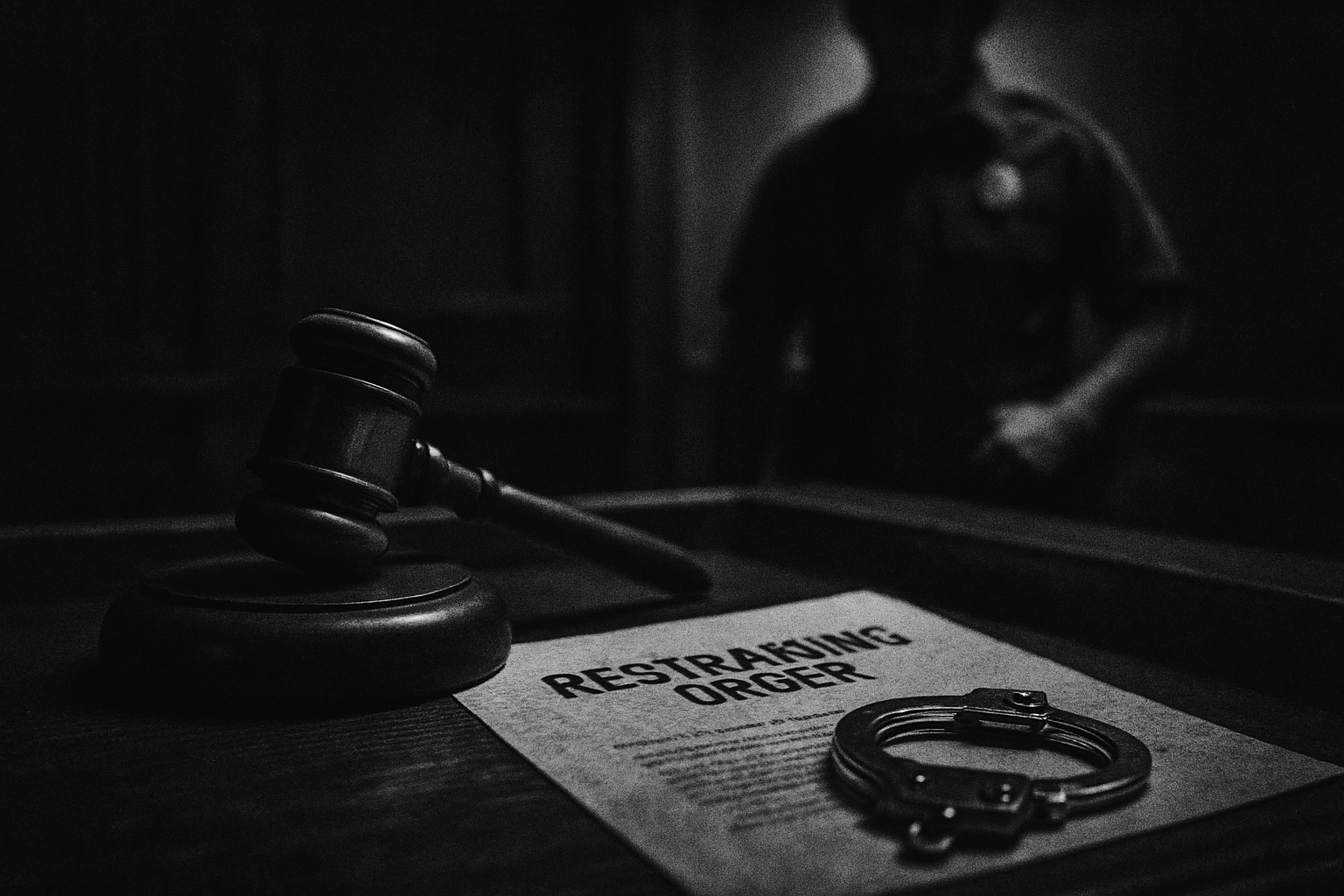
The Supreme Court’s Landmark Reaffirmation: Domestic Abusers and the Right to Bear Arms
Two years after a pivotal 8–1 ruling, the U.S. Supreme Court’s decision in United States v. Rahimi continues to shape the legal landscape around firearms and domestic violence. On June 21, 2024, the Court upheld a federal law barring individuals subject to domestic-violence restraining orders from possessing guns, settling a critical question that had divided lower courts and sparked intense public debate. As of June 2026, that precedent stands firmly in place, serving as a cornerstone for how the Second Amendment is interpreted when public safety and individual rights collide.
The case began when Zackey Rahimi, a Texas man under a protective order for domestic violence, challenged the constitutionality of the federal prohibition on firearm possession by people subject to such orders. The Supreme Court, in an opinion written by Chief Justice John Roberts, rejected Rahimi’s argument that the ban violated his Second Amendment rights. Only Justice Clarence Thomas dissented. The ruling’s implications have reverberated far beyond the courtroom, affecting law enforcement, domestic-violence survivors, advocacy groups, and the broader constitutional framework established just two years earlier in the Court’s 2022 Second Amendment decision.
What the Ruling Established
At its core, the Supreme Court’s decision in Rahimi affirmed that the federal government can prohibit firearm possession by individuals who are subject to a domestic-violence restraining order, provided a court has found that the person poses a credible threat to another’s physical safety. The law in question—18 U.S.C. § 922(g)(8)—had been challenged as overly broad and disconnected from historical tradition, which the Court had previously set as the test for gun regulations.
Chief Justice Roberts’s majority opinion clarified that the historical test does not demand a perfect match between a modern law and an 18th-century statute. Instead, the Court said, a law need only be “relevantly similar” to regulations that were accepted at the founding era. In the case of domestic-abuser gun bans, the majority found ample historical precedent in laws that disarmed individuals judged to be dangerous or who had forfeited their right to keep arms through misconduct.
“The ruling effectively told lower courts that they don’t need to find an exact historical twin for every modern gun regulation,” legal scholars have noted. The decision was widely viewed as a victory for domestic-violence survivors and advocacy groups who had argued that the Second Amendment should not shield abusers from accountability. The 8–1 vote—with Justice Thomas alone dissenting—reflected an unusual degree of consensus on a politically charged issue.
The Immediate and Ongoing Impact
Since the ruling was issued in June 2024, the federal prohibition on gun possession by domestic abusers subject to qualifying protective orders has remained valid nationwide. Law enforcement agencies and prosecutors have continued to use the statute as a tool to disarm individuals identified as threats through civil court proceedings. The decision has also been cited in dozens of lower-court cases reviewing other gun restrictions aimed at people deemed dangerous, reinforcing the government’s authority to regulate firearms in contexts where safety risks are clearly demonstrated.
For survivors of domestic violence, the decision brought a measure of reassurance. Advocacy organizations have described the ruling as a critical safeguard, preventing abusers from legally accessing weapons while restraining orders are in effect. The Johns Hopkins Center for Gun Violence Solutions published analysis shortly after the decision, highlighting its practical benefits: fewer opportunities for lethal violence in intimate partner relationships, particularly where a court has already made a finding of danger.
However, the ruling also left some questions unresolved. The Court did not address whether the same reasoning would apply to other categories of people barred from gun possession under federal law, such as those convicted of nonviolent felonies or individuals with mental health adjudications. Those questions remain open and will likely be tested in future litigation.
The Broader Second Amendment Context
The Rahimi decision cannot be understood without reference to the Supreme Court’s landmark 2022 ruling in New York State Rifle & Pistol Association v. Bruen. In Bruen, the Court established that gun regulations must be “consistent with the Nation’s historical tradition of firearm regulation.” That test sent lower courts scrambling to interpret what counts as a historical analogue, leading to inconsistent outcomes and uncertainty.
Rahimi was the first major test of the Bruen framework. By clarifying that “relevant similarity” rather than identical wording or form is the standard, the Court provided crucial guidance. Judges could now look for analogous historical laws that disarmed dangerous individuals—such as “going armed” statutes or laws targeting those who posed a threat to public peace—rather than requiring a direct match to a specific colonial-era rule.
The decision also underscored that the Second Amendment allows for reasonable restrictions when public safety is at stake. Chief Justice Roberts’s opinion emphasized that the founding generation understood the right to bear arms as subject to limitations for those who had forfeited that right through dangerous conduct. This reasoning has been cited by the federal government and by states defending their own red-flag laws and restraining-order-based gun prohibitions.
As of June 2026, the Rahimi precedent remains the most authoritative statement from the Supreme Court on how to apply the historical test. It has been referenced in cases involving firearm bans for individuals convicted of domestic-violence misdemeanors, for those under temporary protective orders, and even for nonviolent offenders. The decision has given lower courts a firmer footing, though disagreements about its boundaries continue.
Perspectives and Reactions
The ruling drew a range of responses, reflecting the deep divisions that surround gun policy in the United States. Domestic-violence survivors and advocacy groups were among the most vocal supporters. “This decision confirms that the Constitution does not require us to arm abusers,” several groups said in joint statements after the ruling. They pointed to research showing that the presence of a firearm in a domestic-violence situation dramatically increases the risk of homicide.
Gun-rights organizations, by contrast, expressed disappointment. Some argued that the ruling carved out an exception to the Second Amendment that could be widened over time, eroding protections for law-abiding gun owners. The lone dissenter, Justice Clarence Thomas, wrote that the government should not be allowed to strip someone of their Second Amendment rights merely because they are subject to a protective order. He contended that the majority’s historical analysis was flawed and that the law failed the Bruen test.
Law enforcement officials generally welcomed the clarity the decision provided. Police departments and federal agencies had been grappling with confusion over whether they could enforce the prohibition while cases were pending. The Supreme Court’s definitive answer removed that ambiguity, allowing officers to seize firearms from those under qualifying orders without fear of constitutional challenges.
Legal experts have noted that the 8–1 margin was striking, given the Court’s conservative majority. Chief Justice Roberts managed to hold together a broad coalition that included the Court’s liberal justices as well as several conservatives. This suggests that the decision reflects a narrow but principled compromise rather than a wholesale rethinking of the Second Amendment.
What Happens Next
Two years on, the Rahimi decision remains settled law. There is no indication as of June 19, 2026, of any pending rehearing, stay, or reversal by the Supreme Court. The case continues to be cited extensively in both federal and state courts as a touchstone for evaluating gun regulations that target individuals deemed dangerous.
Looking forward, the decision’s legacy will likely be tested in several arenas. First, Congress could consider expanding the category of people barred from gun possession based on danger—for example, those subject to temporary ex parte protective orders before a full hearing. The Rahimi opinion emphasized that the law applied only after a court found a credible threat, leaving open whether brief protective orders without such a finding would pass muster.
Second, state legislatures have begun enacting their own laws that track the reasoning of Rahimi. Several states have passed or strengthened red-flag laws that allow courts to temporarily remove firearms from individuals who pose a risk of violence. The Supreme Court’s endorsement of the “credible threat” standard gives these laws a stronger constitutional basis.
Third, litigation continues over other federal firearms prohibitions, such as the ban on gun possession by people convicted of nonviolent felonies or those with misdemeanor domestic-violence convictions. Lower courts have split on whether these categories meet the “relevant similarity” standard. The Supreme Court may eventually be asked to weigh in again, using Rahimi as a foundation.
Finally, the decision has implications for the ongoing debate about the Second Amendment and public health. Researchers and advocates have used the ruling to push for more evidence-based gun policies, arguing that the Court’s acceptance of historical analogues for modern dangers opens the door to regulations aimed at preventing mass shootings, suicides, and other forms of gun violence.
Conclusion
The Supreme Court’s decision in United States v. Rahimi stands as a defining moment in Second Amendment jurisprudence. By upholding the federal law that bars domestic abusers from possessing firearms, the Court affirmed that the right to bear arms is not absolute—especially when weighed against the demonstrable threat of intimate partner violence. The ruling has provided clarity for courts, empowered law enforcement, and offered a measure of protection for survivors. As the nation continues to grapple with the intersection of gun rights and public safety, Rahimi remains a touchstone: a precedent that balances constitutional tradition with the imperative of keeping firearms out of the hands of those found to pose a credible danger. Its impact will be felt for years to come, shaping how the justice system treats the most vulnerable while respecting the fundamental liberties at the heart of American law.