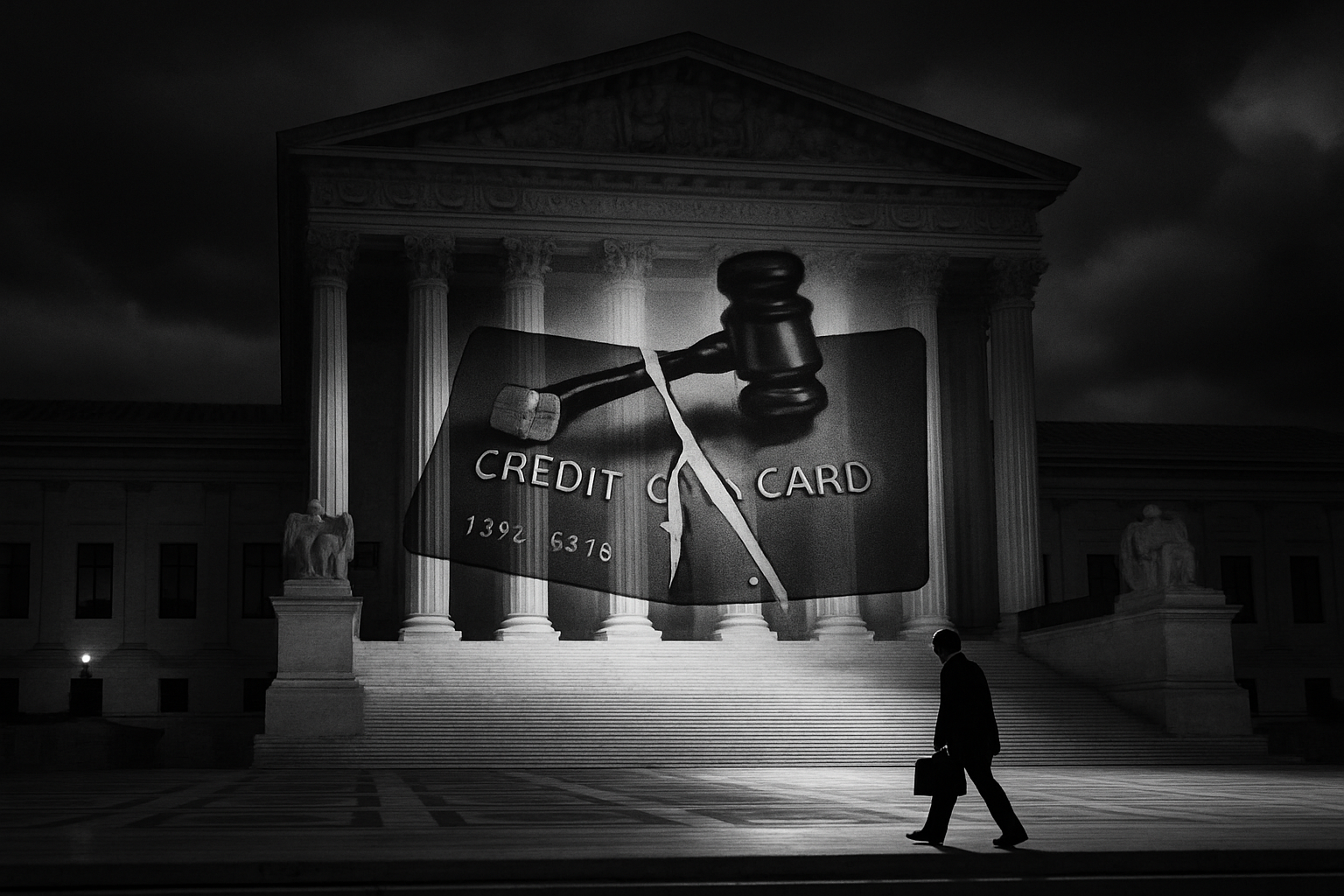
A Landmark Ruling That Stuck: The Supreme Court’s 2024 Decision and the Ongoing Battle Over the CFPB’s Purse Strings
Nearly two years after the Supreme Court handed down a definitive 7-2 ruling that the Consumer Financial Protection Bureau’s (CFPB) funding mechanism is constitutional, the agency finds itself once again at the centre of a legal and administrative tug-of-war. On May 16, 2024, the Court held in Consumer Financial Protection Bureau v. Community Financial Services Association of America, Limited that Congress had the authority to fund the Bureau directly from the Federal Reserve’s earnings, rejecting a Fifth Circuit decision that had found the structure violated the Appropriations Clause. As of June 20, 2026, that decision remains the controlling law.
But the headline, while accurate in describing the Supreme Court’s action, masks a far more complex and live story. The constitutional question is settled. The political battle over implementation, however, is far from over. A separate federal-court order issued on March 13, 2026, in response to a lawsuit brought by consumer advocacy groups, required the CFPB to continue requesting funding from the Federal Reserve Board of Governors—directly blocking an attempt by the agency’s acting director, Russell Vought, to stop making those requests. That ruling underscores a fundamental shift: opponents of the CFPB, having lost the constitutional argument, are now using administrative and lower-court manoeuvres to constrain the agency’s operations from within.
The result is a regulatory landscape in which the CFPB’s financial independence—something its defenders see as essential to its mission and its detractors view as an unconstitutional power grab—remains intact on paper but is being tested in practice. For financial institutions, consumer groups, and the millions of Americans who rely on the Bureau’s enforcement and supervisory powers, the stakes could not be higher.
The 2024 Ruling: A Clear Victory for the Bureau’s Funding Model
Under the Dodd-Frank Wall Street Reform and Consumer Protection Act of 2010, the CFPB is funded through a mechanism that is unique among federal financial regulators. Instead of receiving annual appropriations from Congress, the Bureau is authorised to draw money from the combined earnings of the Federal Reserve System. The statutory provision at issue, codified at 12 U.S.C. § 5497, allows the CFPB Director to request funds “reasonably necessary” to carry out the Bureau’s duties, subject to a cap tied to a percentage of the Federal Reserve’s total operating expenses.
Opponents challenged this structure as a violation of the Appropriations Clause of the Constitution, arguing that because the funding is not subject to the annual congressional appropriations process, it is an illegal delegation of the spending power. In 2022, the U.S. Court of Appeals for the Fifth Circuit agreed, striking down the Bureau’s entire funding mechanism and calling it an unconstitutional end-run around Congress.
The Supreme Court reversed that ruling in a forceful decision on May 16, 2024. Writing for the 7-2 majority, the Court held that Congress had satisfied the Appropriations Clause by authorising the CFPB to draw from the Federal Reserve’s earnings. The decision restored the Bureau’s funding structure, which had been in operation since its creation in 2011, and gave the agency a clear legal foundation for its enforcement, rulemaking, and supervisory activities.
The ruling was a significant victory for the Biden administration and for consumer advocates, who had warned that a contrary decision could have gutted the CFPB and potentially destabilised other independent agencies with similar funding models. But the decision did not end the controversy. Instead, it shifted the battleground from the constitutionality of the funding mechanism to the practical question of how that mechanism is implemented—and who gets to control it.
The March 2026 Lawsuit: A New Front in the Funding Fight
Within two years of the Supreme Court’s decision, the CFPB was back in court over its funding—but this time the issue was not whether the law allows it to request money, but whether it is required to do so. According to a March 13, 2026, court order described by Public Citizen, the CFPB acting director, Russell Vought, had decided to stop requesting funds from the Federal Reserve Board of Governors. The plaintiffs in the case—Rise Economy, the National Community Reinvestment Coalition, and the Woodstock Institute—challenged that decision, arguing that the Dodd-Frank Act imposes a mandatory obligation on the Director to request the funds necessary for the Bureau to fulfil its statutory duties.
The federal judge agreed, ordering the CFPB to resume its funding requests. The order, issued in the U.S. District Court for the District of Columbia, effectively blocked Vought’s administrative halt and reaffirmed that the Bureau cannot unilaterally starve itself of resources. The ruling was a procedural win for the consumer groups, but the conflict is far from resolved. The underlying tension—between a director who appears reluctant to seek funding and a statutory scheme that envisions a fully operational agency—remains.
Russell Vought served as acting director following the departure of Rohit Chopra, who had led the Bureau under President Joe Biden. Vought, a conservative budget official and former director of the Office of Management and Budget, had made no secret of his scepticism toward the CFPB’s mission and its funding autonomy. His decision to pause funding requests was seen by critics as an attempt to starve the agency of resources without formally abolishing it—a tactic that the March 2026 ruling temporarily halted.
The Federal Reserve Board of Governors, the institution from which the CFPB is authorised to request funds, has not publicly commented on the funding freeze or the court order. Under the Dodd-Frank Act, the Fed is required to transfer the funds to the Bureau upon the Director’s request; it has no discretion to refuse or to initiate transfers on its own.
Key Players in the Ongoing Struggle
The current standoff involves a constellation of actors, each with distinct interests and strategies.
The CFPB itself remains a powerful consumer protection regulator with a broad mandate covering mortgages, credit cards, student loans, payday lending, debt collection, and more. Its funding model—insulated from the annual appropriations process—gives it a degree of independence that its supporters argue is essential for shielding the agency from political pressure. Its detractors see that same independence as a democratic deficit and a recipe for overreach.
Russell Vought, as acting director, sits at the centre of the current controversy. His background as a conservative budget hawk and his willingness to test the limits of the funding statute suggest that the March 2026 order may not be the last word. If Vought believes the Supreme Court’s 2024 ruling does not require him to request maximum funding, he could attempt to request only minimal amounts—a move that might invite further litigation.
The Federal Reserve Board of Governors is a passive but crucial actor. The funding mechanism relies on the Fed’s earnings, which are derived primarily from interest on government securities and other assets. The Fed’s role is essentially ministerial: it receives the Director’s request and transfers the funds. There is no indication that the Fed has taken sides in the funding dispute, but any disruption to the transfer process could have operational consequences for the Bureau.
The consumer advocacy groups that brought the March 2026 lawsuit—Rise Economy, the National Community Reinvestment Coalition, and the Woodstock Institute—represent the interests of low-income and minority communities that rely on CFPB enforcement actions to combat predatory lending and other financial abuses. Their lawsuit was a direct response to what they saw as an effort to neuter the agency through administrative inaction rather than legislative repeal.
The original challengers in the Supreme Court case—the Community Financial Services Association of America, Limited, and the Consumer Service Alliance of Texas—represent the payday lending industry. While they lost the constitutional argument, they continue to lobby for legislative changes to the CFPB’s funding structure, and they have urged the agency to adopt less aggressive enforcement policies under the current administration.
Why It Matters: The Practical and Political Stakes
At its core, the CFPB funding controversy is about the independence and stability of federal financial regulation. The Bureau was created in the aftermath of the 2008 financial crisis to consolidate consumer protection functions that had been scattered across multiple agencies. Its designers deliberately chose to fund it outside the annual appropriations process to ensure that the agency could not be defunded or crippled by Congress as a backdoor way of limiting its enforcement activities.
The Supreme Court’s 2024 ruling affirmed that choice as constitutional. But the subsequent events—the attempt by the acting director to stop funding requests and the court order compelling him to resume them—show that the political struggle over the agency’s size and scope continues. If a future director, whether in a Democratic or Republican administration, seeks to shrink the CFPB, the funding mechanism provides a powerful lever: the Director can simply request less money, thereby reducing the agency’s capacity to hire staff, conduct examinations, and bring enforcement actions.
Conversely, if the agency is run by an activist director committed to aggressive enforcement, the funding mechanism gives them the resources to do so without needing congressional approval. That asymmetry is precisely what critics of the CFPB have long opposed. They argue that the agency lacks meaningful accountability to the elected branches of government, and they have called for Congress to amend the Dodd-Frank Act to subject the Bureau to the regular appropriations process.
Supporters of the current funding model counter that the Bureau is already accountable through the political process: its director serves at the pleasure of the president, can be removed by the president, and its rules are subject to congressional review under the Congressional Review Act. They also point out that many other financial regulators—including the Federal Reserve itself, the Office of the Comptroller of the Currency, and the Federal Deposit Insurance Corporation—are funded by fees on the institutions they regulate, a model that is not subject to annual appropriations either.
Different Perspectives: A Divided Debate
The CFPB funding debate does not break neatly along partisan lines. Some Republicans have called for abolishing the Bureau entirely, while others favour retaining it with a more limited mandate. Among Democrats, there is broad support for the agency’s mission but differences over whether its funding structure should be made more transparent or subject to periodic oversight.
In the wake of the March 2026 court order, consumer advocates argued that the ruling vindicated the principle that the CFPB must be adequately funded to do its job. “The attempt to starve the Bureau of resources was a blatant end-run around settled law,” said a representative of Rise Economy, one of the plaintiff groups, in a statement reported by legal news outlets. “The court has made clear that the CFPB must request the funds it needs, and the director cannot simply refuse to ask.”
Industry groups have taken a more measured approach, focusing on rulemaking and enforcement activities rather than the funding dispute itself. Many large financial institutions accept the CFPB as a permanent fixture and have shifted their lobbying efforts toward influencing specific regulations—such as the Bureau’s rules on credit card late fees, overdraft charges, and small-business lending data collection—rather than challenging its existence.
What Happens Next: The Road Ahead
As of June 20, 2026, the CFPB’s funding mechanism remains legally intact, and the agency is once again requesting funds from the Federal Reserve as required by the March 13 order. But the underlying administrative conflict is far from resolved.
Russell Vought remains acting director, and his authority over the Bureau’s budget and operations is substantial. The court order compels him to make funding requests, but it does not dictate the amount he requests or how those funds are spent. If he chooses to request the statutory minimum while still complying with the letter of the order, he could effectively shrink the agency’s footprint without technically violating the law. That could trigger a new round of litigation from the same consumer groups, who would argue that the Dodd-Frank Act requires the Director to request funds “reasonably necessary” to carry out the Bureau’s duties—and that a token request is not sufficient.
At the same time, the broader political landscape is shifting. With the 2026 midterm elections approaching, the CFPB has become a campaign issue once again, particularly among Republican candidates who have pledged to curb the Bureau’s authority. Legislation to subject the CFPB to the appropriations process has been introduced in Congress but has not advanced, given the narrow partisan divides in both chambers. Should control of the House or Senate change hands in November, the funding issue could resurface as a legislative priority.
The Supreme Court’s 2024 ruling provided a definitive answer to the constitutional question, but it did not resolve the political question of how much independence a consumer financial regulator should have. That debate continues—in courtrooms, in Congress, and inside the agency itself. For now, the CFPB remains funded, operational, and legally secure. But the March 2026 order is a reminder that constitutional victory does not guarantee operational peace. The fight over the CFPB’s purse strings is far from over.