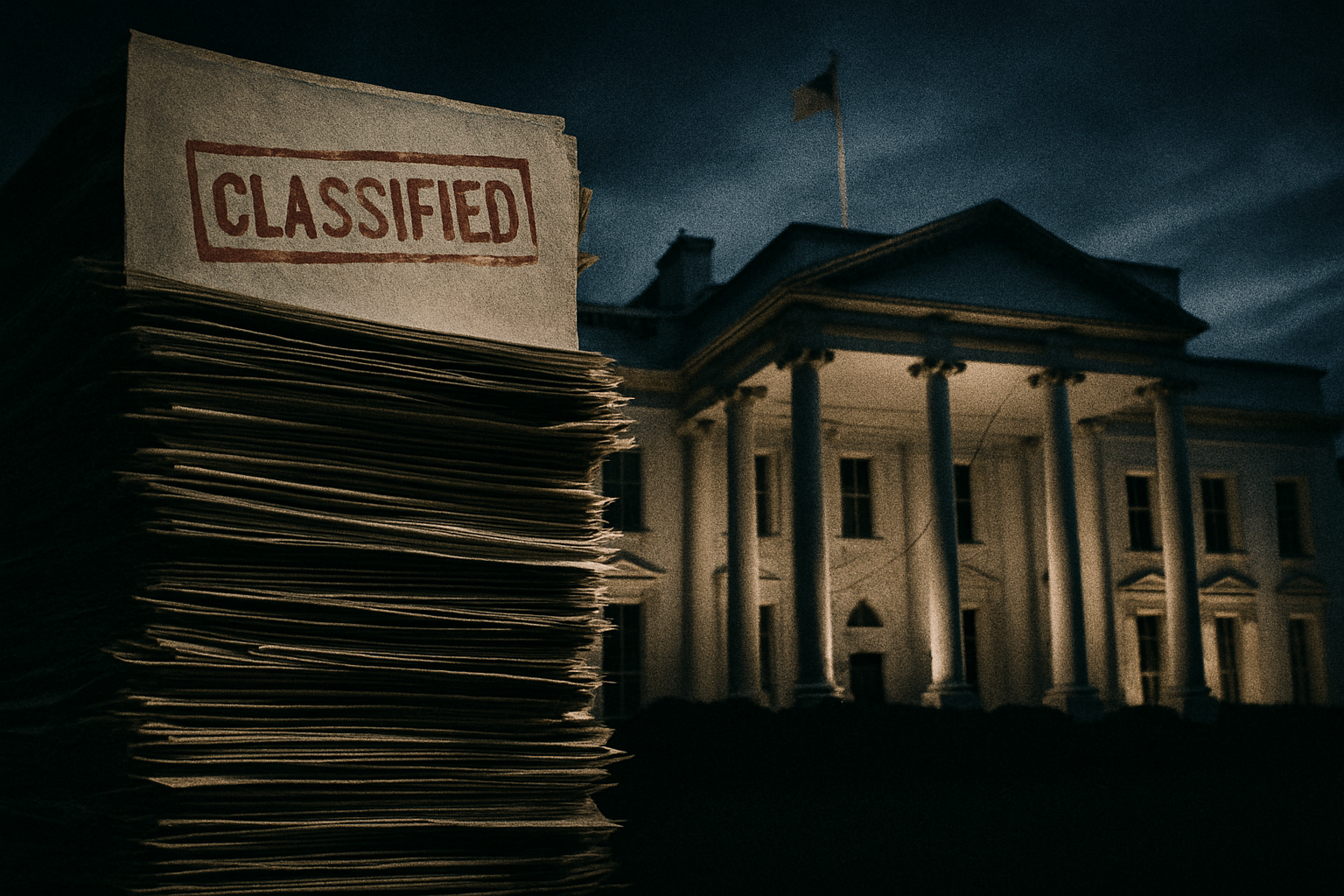
White House faces criticism after secret U.S.–Iran memorandum is disclosed
The Trump administration has released the full text of a previously secret 14-point memorandum of understanding with Iran, triggering a storm of criticism from lawmakers, allies, and Iran hawks who accuse the White House of negotiating a far-reaching deal without proper transparency or consultation. The document, signed by President Donald Trump, lays out terms for ending the current conflict in Iran, reopening the Strait of Hormuz, rolling back sanctions, and initiating nuclear talks—but administration officials insist it remains only a 60-day framework, not a final peace agreement.
The disclosure on Wednesday, 17 June, came after an earlier leak of an outdated draft forced the White House’s hand, exposing a widening gap between what U.S. officials had publicly denied and what had actually been agreed behind closed doors. As the memorandum begins to reshape the strategic landscape in the Persian Gulf—with three Saudi supertankers already transiting the Strait of Hormuz—the political fallout in Washington and among U.S. allies is intensifying.
What the memorandum contains
The publicly released text details a sweeping set of commitments from both Washington and Tehran. The core elements include an extended ceasefire and cessation of hostilities on “all fronts, including Lebanon,” the reopening of the Strait of Hormuz and the lifting of the U.S. naval blockade, and a roadmap for comprehensive sanctions relief. The memorandum also provides a framework for negotiations on Iran’s nuclear program and outlines a proposed $300 billion reconstruction and economic development plan for Iran, funded through a mix of international contributions and the unfreezing of Iranian assets.
According to the research, the United States has begun steps toward dismantling its naval blockade and restrictions affecting Iranian ports. Expectations are that the blockade will be fully lifted within 30 days of the signing of the MOU. In return, Iran has committed to ensuring free passage for commercial vessels through the Strait of Hormuz, a waterway that carries roughly one-fifth of the world’s oil supply.
The document also commits the U.S. to “eliminate all forms of sanctions against Iran, including those from UN Security Council resolutions and unilateral U.S. sanctions, both primary and secondary, on a mutually agreed schedule.” This provision, in particular, has drawn sharp criticism from opponents who argue it amounts to a total sanctions rollback without sufficient guarantees on Iran’s behavior.
Nuclear negotiations to follow
Negotiations on Iran’s nuclear program are scheduled to begin after a signing ceremony on June 19. The research indicates that sanctions relief is explicitly tied to inspections and compliance with the nuclear framework. U.S. officials have emphasized that all major steps under the memorandum are performance-based and reversible, a point the White House press operation is stressing in its damage-control efforts.
The MOU does not constitute a final peace treaty. U.S. officials describe it as a 60-day framework to extend the current ceasefire and launch further negotiations on outstanding issues, including the nuclear file. The administration’s position is that the document is designed to de-escalate immediate tensions and create a structural pathway to a more comprehensive settlement.
Criticism over secrecy and process
The most intense criticism centers not on the substance of the memorandum—though that has drawn its own share of fire—but on how it was negotiated and communicated. For days before the official release, an outdated draft of the 14-point document leaked to media outlets and was circulated by Iranian state media. During that period, U.S. officials publicly denied the accuracy of the circulating draft, downplaying it as either unofficial or incomplete.
When the decision to release the official text was finally made on June 17, it came only after the leak and rising political and media pressure about what had been agreed with Tehran behind closed doors. Critics point out that the administration’s public denials about elements of the leaked draft have turned out to be largely inconsistent with the final document, which closely mirrors the earlier version.
The White House is now accused of failing to brief Congress and key allies in detail before President Trump signed the memorandum. Lawmakers on both sides of the aisle have complained that they were kept in the dark about a major foreign policy initiative that has already begun to alter the battlefield and the energy landscape. U.S. allies Israel and Gulf partners, as well as other Iran hawks in the region, have alleged that the memorandum was negotiated and partially implemented without adequate consultation or public disclosure.
Shifting explanations
The administration’s handling of the disclosure has been marked by shifting explanations. Initially, officials described the memorandum as a “framework” and not a “final peace deal.” While that characterization remains official policy, the release of the full text—and the fact that Trump himself signed the document—has made it harder to argue that the scope is limited. The research notes that the White House press operation is now engaged in active damage control, emphasizing that this is “only a framework agreement” and that all major steps are tied to performance.
Yet the very existence of concrete terms, including a timetable for sanctions relief and a specific reconstruction fund, has fueled suspicions that the administration is moving far faster toward normalization with Tehran than it has been willing to admit. One senior U.S. official presented the full document on Wednesday, June 17, but the manner of that presentation—after weeks of official obfuscation—has done little to rebuild trust with oversight bodies or foreign partners.
Substance of the deal draws fire
Beyond the process, the substance of the memorandum has provoked fierce debate. The commitment to eliminate all forms of sanctions against Iran is seen by critics as a total capitulation to Tehran’s demands, with insufficient conditionality. The research states that the sanctions rollback is to be implemented on a mutually agreed schedule, but critics argue that such language gives Iran leverage to delay compliance while the U.S. eases pressure.
Senators and representatives from both parties have raised concerns that the $300 billion reconstruction plan could amount to a massive infusion of funds to the Iranian regime at a time when its military and proxy networks remain active across the Middle East. They also point to the fact that the memorandum includes a framework for nuclear talks but does not detail how Iran will be prevented from enriching uranium to weapons-grade levels in the interim.
Impact on allies and regional dynamics
The disclosure has also strained relations with key U.S. allies. Israel, which has long warned against a deal that legitimizes Iran’s nuclear and missile programs, has expressed alarm over the lack of prior consultation. Gulf Arab states, including Saudi Arabia and the United Arab Emirates, are described in the research as having alleged that the memorandum was negotiated and partially implemented without adequate consultation. The symbolic transit of three Saudi-flagged supertankers through the Strait of Hormuz—carrying 6 million barrels of crude—came hours after Trump’s endorsement of the agreement, suggesting that Riyadh has quickly moved to take advantage of the de-escalation even while expressing private reservations.
European allies, while broadly supportive of diplomatic engagement with Iran, have criticized the administration’s opaque approach. Some have questioned whether the performance-based conditions on sanctions relief can be effectively monitored and enforced, given that the memorandum does not provide for a multilateral verification mechanism.
Strategic implications on the ground
The memorandum has already begun to reshape the strategic environment in the Persian Gulf and beyond. The U.S. naval blockade is being dismantled, and restrictions affecting Iranian ports are being lifted. This represents a rapid reversal of the Trump administration’s earlier “maximum pressure” strategy, which had included economic warfare and military coercion designed to force Iran to the negotiating table.
The reopening of the Strait of Hormuz—the world’s most strategically important oil chokepoint—has immediate global implications. Global energy markets have been destabilized by the conflict and the blockade, and the passage of the three Saudi supertankers signals that normal traffic may resume more quickly than many analysts had anticipated. However, questions remain about whether Iran will fully comply with its commitment to ensure free passage for commercial vessels, especially given the deep mistrust that persists on both sides.
The ceasefire extension to include “all fronts, including Lebanon” suggests that the terms of the memorandum go beyond bilateral U.S.-Iran issues. This provision implies a halt to hostilities involving Iran’s allies in Lebanon—Hizbollah—and possibly other proxy groups in Syria and Yemen. The full scope of the ceasefire commitment and how it will be enforced remains unclear.
Background and context
The current Iran conflict, which began in late 2025, escalated dramatically after the collapse of earlier diplomatic efforts. President Trump’s decision to withdraw from the 2015 nuclear deal in 2018 had already set the stage for rising tensions, including Iran’s gradual abandonment of the deal’s limits on enrichment and the U.S. imposition of crippling sanctions. The conflict that erupted in 2025 included direct military exchanges, a tightening U.S. naval blockade, and disruptions to global oil shipments through the Strait of Hormuz.
The memorandum represents the first major break from that trajectory. It suggests that the administration is seeking an exit from a costly and destabilizing war that had come to define Trump’s second-term foreign policy. The $300 billion reconstruction plan indicates a recognition that a durable peace will require substantial investment in Iran’s battered economy—a point that proponents of engagement have long argued.
However, critics see the memorandum as a hasty and dangerous concession that rewards Iranian aggression. They point to Iran’s continued nuclear advancements, its ballistic missile program, and its support for armed proxies as evidence that Tehran cannot be trusted to abide by any agreement.
What happens next
The signing ceremony scheduled for June 19 will formally inaugurate the 60-day framework. Immediately afterward, negotiations on Iran’s nuclear program are expected to begin. The research notes that sanctions relief is explicitly tied to inspections and compliance, meaning the U.S. retains the option to reimpose penalties if Iran fails to meet its obligations.
The administration’s insistence that the MOU is reversible will be put to the test in the coming weeks. If Iran begins to dismantle parts of its nuclear infrastructure or allows intrusive inspections, the political calculus in Washington could shift, with some former critics possibly deferring judgment. On the other hand, any perceived Iranian violation—or the emergence of evidence that the memorandum was misleading about the scope of sanctions relief—could ignite a new firestorm.
Congressional oversight committees are expected to hold hearings in the coming days. Lawmakers who were excluded from prior discussions are demanding testimony from senior administration officials, including the secretary of state and the national security adviser. The administration’s credibility, already damaged by the gap between its earlier denials and the leaked content, will be a central theme.
For U.S. allies in the region, the period ahead is fraught with uncertainty. Israel has operational autonomy and could decide to strike Iranian nuclear facilities if it concludes that the framework does not adequately address its security concerns. Gulf states will weigh the economic benefits of resumed oil traffic against the strategic risks of a reinvigorated Iranian regional role.
The memorandum has opened a new chapter in one of the world’s most volatile geopolitical flashpoints. Whether it leads to a durable peace or a deeper crisis will depend on the execution of the performance-based steps, the degree of transparency the White House is willing to provide, and the behavior of all parties over the next 60 days. For now, the Trump administration faces a daunting challenge: defending a deal it initially tried to keep secret, while trying to convince skeptics that the agreement is both limited and reversible—despite evidence that it has already begun to transform the landscape.