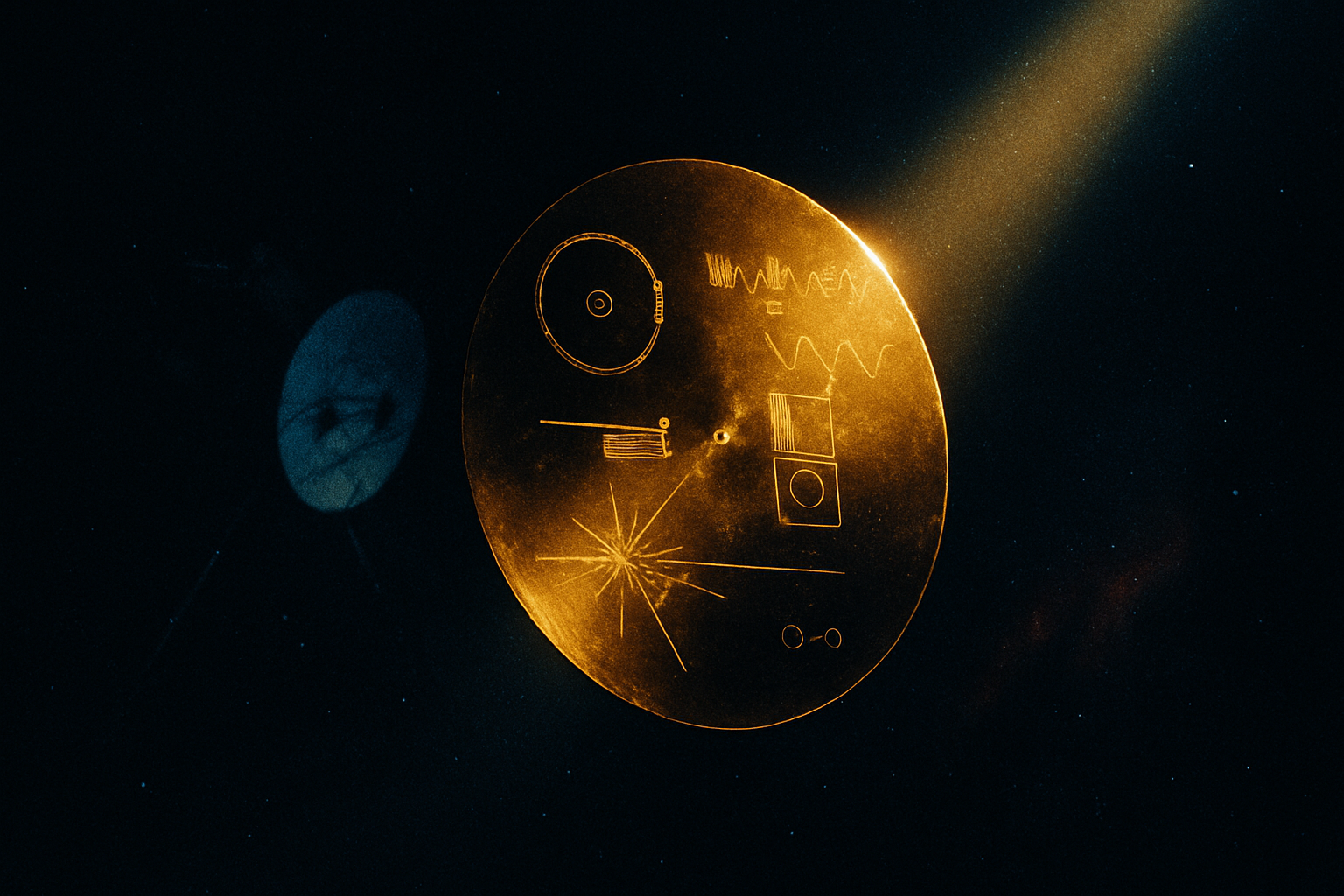
Just over three years ago, Voyager 1 fell silent in a way that left engineers fearing the worst. A corrupted memory chip in its onboard computer began sending back unintelligible gibberish, severing the stream of scientific data that had flowed continuously for more than four decades. The most distant human‑made object, a spacecraft that had already crossed into interstellar space, was effectively deaf and mute. But after months of painstaking detective work and a daring software transplant, NASA has confirmed that Voyager 1 is once again returning usable science from all of its remaining instruments. The mission that keeps defying the odds is back in full operation.
The recovery marks one of the most impressive deep‑space repair jobs ever undertaken. Engineers at NASA’s Jet Propulsion Laboratory in Southern California diagnosed the root cause — a single failed chip in the Flight Data Subsystem — and then devised a way to relocate critical code to unused portions of memory, working with a spacecraft that is more than 25 billion kilometres away. The fix began to pay off in May and June of 2024, when first two, then all four science instruments resumed beaming back data. Two years later, in the summer of 2026, Voyager 1 is again a fully functioning interstellar observatory.
Yet the triumph is not without its trade‑offs. To keep the aging spacecraft alive, NASA has begun a carefully planned series of instrument shutdowns. The most recent came on April 17, 2026, when engineers turned off the Low‑energy Charged Particles (LECP) experiment to conserve dwindling power from the craft’s radioisotope thermoelectric generators. Voyager 1 now carries just two active science instruments — the Plasma Wave Subsystem and the Magnetometer — both of which, according to NASA, are “working great, sending back data from a region of space no other human‑made craft has ever explored.” The mission is far from over, but it is now operating with a leaner, more energy‑efficient payload.
A Fault That Nearly Ended the Mission
The 2023 anomaly was one of the most serious technical crises Voyager 1 had faced since its launch in 1977. In November of that year, the spacecraft began transmitting what engineers described as a repeating pattern of meaningless bits, effectively a data stream that could not be decoded into telemetry or science. For several months the Voyager team could not determine the cause. The spacecraft was still receiving commands and responding, but it was not returning usable information.
The breakthrough came after the team sent a “poke” command — an instruction designed to prompt the Flight Data Subsystem to execute different sequences of its software. This allowed them to isolate the problem to a single chip that had failed, presumably due to age or accumulated radiation damage. The code responsible for formatting science and engineering data was stored on that chip and was now inaccessible. The solution was to relocate that code to other parts of the FDS memory that were still functional. It was a delicate operation: the entire code could not fit into any one alternate location, so engineers had to split it into segments and store them in different areas, carefully adjusting memory addresses and ensuring the spacecraft could still find and execute them.
On April 20, 2024, the team sent the first code relocation command. It took nearly two days for the signal to reach Voyager 1 and another two days for the response to arrive back at Earth. When it did, the spacecraft was once again sending readable data — first from its engineering systems, and then, by June 2024, from all four science instruments. The repair was a testament to the skill and patience of a team that had been working with a spacecraft designed in the 1970s, with limited documentation and decades‑old hardware.
Current Status: Two Instruments, Full Science Return
As of mid‑2026, Voyager 1’s science operations are described as back to normal. The two remaining instruments — the Plasma Wave Subsystem and the Magnetometer — are gathering data on the interstellar medium: the thin soup of charged particles, magnetic fields, and plasma waves that fills the space between stars. The Plasma Wave Subsystem listens for oscillations in the plasma, which can reveal the density and temperature of the interstellar gas. The Magnetometer measures the strength and direction of magnetic fields, helping scientists map the boundary of the heliosphere — the protective bubble created by the Sun’s solar wind — and understand the structure of the interstellar environment beyond.
The research provided by NASA indicates that these instruments “are working great.” The return of science data has allowed researchers to continue building a picture of interstellar space, a region that no other mission has yet reached. Voyager 2, which also crossed into interstellar space in 2018, continues to operate with some instruments as well, but it is farther from Earth and its power budget is also being carefully managed.
The spacecraft itself remains healthy. It is still able to receive commands through the Deep Space Network and to transmit telemetry and science data back to Earth. The RTGs, which convert heat from decaying plutonium into electricity, continue to produce power, albeit at a diminishing rate. NASA estimates that they will support science data return for several more years — likely with at least one instrument operating into the late 2020s — and engineering telemetry into the mid‑2030s, perhaps as late as 2036.
Distance and the Approaching Light‑Day Milestone
Voyager 1’s location is itself a measure of human ambition. As of late April 2026, the spacecraft was approximately 172.6 astronomical units from Earth — roughly 25.8 billion kilometres (16 billion miles). It is the most distant object ever built by humanity, and it is still moving outward at about 17 kilometres per second.
A notable milestone is approaching. NASA and outside observers project that Voyager 1 will reach one light‑day from Earth in November 2026. One light‑day is the distance a radio signal travels in a single day. At that range, a command sent from Earth will take a full 24 hours to reach the spacecraft, and any response will take another 24 hours to return. Round‑trip communication will stretch to two days. It is a stark reminder of the vast emptiness through which Voyager is travelling — and of the patience required to operate a spacecraft at such distances.
The Voyager project manager, Suzy Dodd, has been cited in recent coverage discussing the spacecraft’s distance and projected lifetime. The mission manager, Kareem Badaruddin, was quoted in NASA/JPL communications about the April 2026 instrument shutdown, emphasising that science continues with the remaining instruments and that the team’s focus remains on keeping both Voyagers operating as long as possible.
Why It Matters: Interstellar Science at the Edge
The return to full science operations is significant for several reasons. First, the data from Voyager 1 is irreplaceable. No other spacecraft is sampling the interstellar medium directly. The New Horizons mission, which flew past Pluto in 2015, is now in the Kuiper Belt and heading outward, but it will be decades before it reaches the heliopause. The Interstellar Boundary Explorer (IBEX) and the upcoming Interstellar Mapping and Acceleration Probe (IMAP) study the boundary from Earth orbit, but they cannot take in‑situ measurements. Voyager 1 and its twin remain the only platforms that can directly measure the properties of the interstellar plasma and magnetic field.
Second, the recovery itself demonstrates the resilience of the Voyager design and the ingenuity of the engineering team. The fact that a spacecraft launched in 1977, with computers that have less memory than a modern car key, could be reprogrammed remotely to overcome a hardware failure is extraordinary. It speaks to the foresight of the original designers, who built in redundancy and flexibility, and to the dedication of the current team, which has kept the mission alive through decades of budget pressures and technical challenges.
Third, the power‑saving measures highlight the inevitable end of the mission. Every instrument shutdown is a small death, a reminder that the RTGs are slowly dying. But NASA has been transparent about this process, and the orderly shutdowns are designed to maximise the science return while keeping the spacecraft functioning as long as possible. The “Big Bang” — a major configuration change planned for testing in 2026 — is another example of the team’s determination to wring every last bit of data from the aging probe. That change, described in NASA materials, is expected to involve a larger reorganisation of power and operations, potentially extending the mission further.
Different Perspectives: The Trade‑Offs of Longevity
Not everyone views the extended operation of Voyager 1 with unalloyed optimism. Some scientists and mission planners have argued that the money and Deep Space Network time required to maintain the Voyagers could be better spent on newer missions. The DSN, which supports Voyager as well as many other deep‑space probes, is a finite resource. As the number of active missions grows — including Mars rovers, the Europa Clipper, and future lunar outposts — scheduling time for a spacecraft that is returning only a trickle of data may become harder to justify.
NASA has defended the investment, noting that Voyager’s data remains scientifically unique and that the cost of operating the two spacecraft is relatively modest compared with flagship missions. The agency has also pointed to the missions’ public engagement value: Voyager has a cultural significance that few other NASA missions can match, and its ongoing journey captures the imagination of people around the world.
Another perspective comes from the engineering community, which views Voyager as a testbed for ultra‑long‑duration spaceflight. The lessons learned from managing power, radiation, and component failure at interstellar distances will be invaluable for future missions to the outer solar system and beyond. The “Big Bang” configuration change, if successful, could inform the design of next‑generation probes intended to operate for decades.
What Happens Next: The Final Years
Looking ahead, NASA expects Voyager 1 to continue returning science data for several more years, though the pace of instrument shutdowns will accelerate as power levels fall. The RTGs, which originally produced about 470 watts at launch, now generate well under 200 watts. Each shutdown of a science instrument frees about 10 to 20 watts for other systems.
The two remaining instruments — the Plasma Wave Subsystem and the Magnetometer — draw relatively little power compared with the earlier instruments, so they may be the last to be turned off. Even after all science instruments are shut down, the spacecraft’s engineering systems may continue to transmit telemetry for a decade or more, providing information on the spacecraft’s thermal state, power levels, and orientation as it drifts deeper into interstellar space.
The milestone of one light‑day in November 2026 will be a symbolic moment, but it does not change the spacecraft’s operations. The DSN will continue to listen for its faint signal, which by then will be less than a billionth of a watt when it reaches Earth’s antennas. The team will continue to monitor the spacecraft’s health and make adjustments as needed.
Conclusion
Voyager 1’s full return to normal science operations after the 2023 fault is a remarkable achievement — a triumph of human ingenuity over the unforgiving environment of deep space. It is also a reminder that all missions, no matter how successful, eventually end. The spacecraft that carried the Golden Record and gave humanity its first glimpse of Jupiter’s volcanoes and Saturn’s rings is now a lone sentinel in the darkness, sending back whispers from the void.
For the scientists and engineers who have devoted decades to this mission, every new data point is a gift. For the rest of us, Voyager 1 remains a symbol of what we can accomplish when we reach beyond our own world. As it approaches one light‑day from Earth, it continues to do what it has always done: explore the unknown, and in doing so, help us understand our place in the universe.